2018年全国英语竞赛《B类英语专业》决赛试题(网友回忆版)
B类英语专业
历年真题
共 64 题
2794 次浏览
更新于 2026-09-26
二、Part Ⅱ Vocabulary
15 marks
1
Rent is usually paid _____ the first day of a month.
- A.for
- B.to
- C.in
- D.on
2
I ordered a pizza and salad.The pizza was nice but _____ salad was disgusting.
- A.a
- B.an
- C.the
- D.\
3
It’s so nice to hear from her again._____, we last met more than ten years ago.
- A.That’s to say
- B.Believe it or not
- C.In other words
- D.So to speak
4
You could always _____ Mr.Hunter to settle an argument, no matter what was discussed.
- A.believe in
- B.count on
- C.trust in
- D.call on
5
The first, second, and the third awards went to Jack, Tom, and Harry _____.
- A.respectively
- B.similarly
- C.differently
- D.equally
6
A tire _____ when you pump air into it; it shrinks when the air is gone.
- A.explores
- B.exploits
- C.expands
- D.exposes
7
He was a brilliant musician as a boy, but he never _____ his early promise.
- A.completed
- B.performed
- C.concluded
- D.fulfilled
8
The number of stay-at-home husbands in the U.K.reached a _____ high last year, new figures show.
- A.novel
- B.brand
- C.huge
- D.record
9
The city planning commission said that their financial outlook for the next year was optimistic.They expect enough tax _____.
- A.revenues
- B.efficiency
- C.privileges
- D.validity
10
Parents often faced the _____ between doing what they felt was good for the development of the child and what they could stand by way of undisciplined noise and destructiveness.
- A.premise
- B.dilemma
- C.junction
- D.paradox
11
Very few university students understood his lecture, the subject of which was very _____.
- A.dim
- B.conspicuous
- C.intelligible
- D.obscure
12
_____, Mr.Flanigan admitted that he pushed too hard, and ultimately his efforts failed.
- A.On average
- B.In retrospect
- C.In essence
- D.On occasion
13
—Oh, hello.You must be our new neighbor.
—Yes, that’s right.
—Let me introduce myself.I’m Jane, your neighbor across the street.
—_____.My name is Wendy.I just moved in yesterday.
—Yes, that’s right.
—Let me introduce myself.I’m Jane, your neighbor across the street.
—_____.My name is Wendy.I just moved in yesterday.
- A.It’s nice to meet you
- B.If I can help in any way
- C.I appreciate that
- D.Forgive me
14
—You know … If you ask me, they’re building too many offices and apartment buildings in our area.
—_____
—The area is becoming noisy and crowded, and traffic during rush hour is terrible.
—Hmm.You seem to feel very strongly about that.
—_____
—The area is becoming noisy and crowded, and traffic during rush hour is terrible.
—Hmm.You seem to feel very strongly about that.
- A.Crime rates are significantly higher in urban areas.
- B.My apartment has a large kitchen area.
- C.What makes you say that?
- D.Will the new law increase building costs?
15
—Hey, Rose, there’s a letter for you.
—Thanks.You must’ve got in late last night.I didn’t even hear you come in, and I went to bed after one.
—I did, actually, yes.I went and met some old friends from college that I hadn’t seen for ages.
—Oh, _____? That must’ve been nice.
—Thanks.You must’ve got in late last night.I didn’t even hear you come in, and I went to bed after one.
—I did, actually, yes.I went and met some old friends from college that I hadn’t seen for ages.
—Oh, _____? That must’ve been nice.
- A.would you
- B.wouldn’t you
- C.did you
- D.didn’t you
三、Part Ⅲ Cloze
10 marks
 In 1971, a group of doctors got together in France and created an organization called Medecins Sans Frontieres, or MSF, which (46) _____ (translate) as Doctors Without Borders.These doctors believed that all people have the right to medical care, whatever their race, religion, or political affiliation, and that meeting their needs is more important than (47) _____ (respect) national borders.The doctors wanted to give emergency aid to victims of war, epidemics, and disasters, whether natural or (48) hu_____ in origin.To do this they organized volunteer teams of health care workers to go to often dangerous and remote areas.
At first, Doctors Without Borders was a very small organization.It consisted (49) _____ volunteers lived on money they earned from other jobs.Other international organizations considered the volunteers from Doctors Without Borders to be “amateurs” or “tourists”.The organization did not grow very much because the volunteers did not ask for charity from the public for their service.
After 1978, because of world conflicts and the growth of refugee camps everywhere, the organization’s activities (50) spr_____ like the roots of a tree.Doctors Without Borders began to take a more professional approach.It realized it needed funds and started to use the kinds of fund-raising techniques used in American political campaigns.This seemed to work well, and with the money it (51) _____ (raise), Doctors Without Borders organized itself better and got better technology for dealing with emergencies.First, it began to pay an administrator and to give a small amount of money to doctors who were sent out for six months.Expanding from its origins in France, it (52) dev_____ sections in other countries—first in Belgium, Switzerland, the Netherlands, and Spain, and later in other countries such as Australia and Canada.To encourage people to join the organization and give stability to its volunteers, it began to pay the doctors who worked in the headquarters, to give travel allowances, and to give a (53) stip_____ of $700 a month to doctors who worked on long-term missions in the field.Since the 1980s, the number of doctors and nurses joining the organization has increased.In 1987, a U.S.branch of Doctors Without Borders was (54) est_____ in New York to allow American doctors to become involved.Having trained and worked in an organized and advanced medical system, American doctors wanted to see how big an impact their skills could have in a less developed country.
Doctors Without Borders is independent and flexible in its operation because it is not funded by any government.(55) Al_____ the organization has its origins in France, it receives less than one percent of its total budget from the French government.It is a nonprofit organization that gets its funds from donations by the public.
16
_____.
17
_____.
18
_____.
19
_____.
20
_____.
21
_____.
22
_____.
23
_____.
24
_____.
25
_____.
四、Part Ⅳ RC
30 marks(Reading Comprehension)
Section A (5 marks)
Questions 56 to 60 are based on the following passage. Once again, there has been a series of break-ins in the town.This week several homes have been broken into in Robertson Street and residents are both worried and angry.“Something must be done about this now,” said 58-year-old Jack Clements.“It’s time the police got their finger out and caught these villains.A lot of elderly people live around here and they’re terrified.”
A police spokesman told us, “We are doing all in our power to catch the people who are responsible for these burglaries.The police are stretched to breaking point in this town.Because of budgetary requirements we have made drastic reductions in the number of police officers on the beat and this at a time when we are faced with a rising tide of crime, especially among young people.”
Said Dick Rogers, 64, another resident of Robertson Street, “The government should put its money where its mouth is.They’re always going on about the importance of law and order, but we still don’t have nearly enough police.We used to have a police force that was in a class by itself, but now we hear of nothing but cutbacks.”
Mary Roberts, 67, also a resident of Robertson Street, said, “It’s a sign of the times that these crimes are being committed by young people.It’s just part and parcel of their general attitude.They’re no longer afraid of anyone in authority and have no respect for other people or their property.If we catch any of them around here breaking into houses we’ll give them what for, I promise you.”
Inspector James Rowland sympathized with the concern of the Robertson Street residents, but urged them not to take the law into their own hands.“If you do see someone breaking in, get in touch with us immediately.Don’t be tempted to have a go or you could end up being badly injured.We have a lot of officers working on these burglaries at the moment, but up till now we have not made any arrests.We are, however, following up a few lines of enquiry, although we are obviously not in a position at this stage to name names.Meanwhile, we would ask all members of the public to be vigilant and to report anything suspicious to the police.”
Questions 56 to 60
Complete the table using no more than three words for each blank.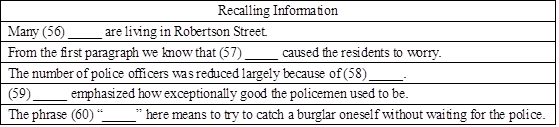
Questions 56 to 60 are based on the following passage.
Once again, there has been a series of break-ins in the town.This week several homes have been broken into in Robertson Street and residents are both worried and angry.“Something must be done about this now,” said 58-year-old Jack Clements.“It’s time the police got their finger out and caught these villains.A lot of elderly people live around here and they’re terrified.”A police spokesman told us, “We are doing all in our power to catch the people who are responsible for these burglaries.The police are stretched to breaking point in this town.Because of budgetary requirements we have made drastic reductions in the number of police officers on the beat and this at a time when we are faced with a rising tide of crime, especially among young people.”
Said Dick Rogers, 64, another resident of Robertson Street, “The government should put its money where its mouth is.They’re always going on about the importance of law and order, but we still don’t have nearly enough police.We used to have a police force that was in a class by itself, but now we hear of nothing but cutbacks.”
Mary Roberts, 67, also a resident of Robertson Street, said, “It’s a sign of the times that these crimes are being committed by young people.It’s just part and parcel of their general attitude.They’re no longer afraid of anyone in authority and have no respect for other people or their property.If we catch any of them around here breaking into houses we’ll give them what for, I promise you.”
Inspector James Rowland sympathized with the concern of the Robertson Street residents, but urged them not to take the law into their own hands.“If you do see someone breaking in, get in touch with us immediately.Don’t be tempted to have a go or you could end up being badly injured.We have a lot of officers working on these burglaries at the moment, but up till now we have not made any arrests.We are, however, following up a few lines of enquiry, although we are obviously not in a position at this stage to name names.Meanwhile, we would ask all members of the public to be vigilant and to report anything suspicious to the police.”
Questions 56 to 60
Complete the table using no more than three words for each blank.
26
_____.
27
_____.
28
_____.
29
_____.
30
_____.
Section B (10 marks)
Questions 61 to 65 are based on the following passage.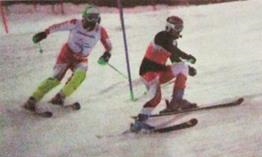 Winter sports face a double threat, from climate and demographic change.The industry’s response is making it worse.
(61) _____.But the effect has been greater in the Alps, the mountain range most visited for winter sports, which has warmed by about 2℃.This has been most intense in summer, which is why the Marmolada glacier has been melting so fast.Increasingly, though, global warming is affecting the snow and ice in winter, too, with profound consequences for the winter-sports industry that has brought the high life to poor Alpine valleys.
(62) _____.Laurent Vanat, author of an annual report on snow and mountain tourism, estimates that the number of skier-days (visits to ski slopes for part of or a whole day) in the world’s main ski destinations fell from about 350m in the 2008-09 season to about 320m in 2015-16.This includes declines in the United States, Canada, France, Switzerland, Italy and, most markedly, in fast-aging Japan.The drop would be bigger still were it not for breakneck growth in China, where skier-days nearly tripled in the same period to 11m.American resorts (usually small ones) have been closing since the late 1980s.Those in the European Alps, which account for about 40% of skier-days, have mostly kept going, albeit with various public subsidies.(63) _____.In Mediterranean antiquity they were sacred places where the heavenly touched the earthly: Greek gods dwelt on Olympus and Moses was given the law on Mount Sinai.Later they became places of dread, where monsters lurked.The highest mountain in the Alps was known as Montagne Maudite, the “cursed mountain”, before becoming Mont Blanc.
(64) _____.Messrs Scott and Steiger have reworked climate-model assessments to take this into account.One looks at roughly 300 resorts in the vulnerable eastern Alps (parts of Germany, Austria, Switzerland and Italy).Relying just on natural snow, about 70% of them would no longer survive with 2℃ more warming, and 90% would be endangered with 4℃.But with snow-making these proportions fell to about 15% and 60% respectively.
(65) _____.Not every ski resort has an iconic mountain that looks wonderful in summer.And for all the golf, horse-riding and mountain-biking that may be on offer, nothing draws people quite like the thrill of snow, many resort officials say.Their mantra is: “Skiing is not everything.But without skiing there is nothing.”
Questions 61 to 65
Choose from the sentences A—G the one which best fits each gap of 61—65.There are two extra sentences which you do not need to use.
Questions 61 to 65 are based on the following passage.
Winter sports face a double threat, from climate and demographic change.The industry’s response is making it worse.(61) _____.But the effect has been greater in the Alps, the mountain range most visited for winter sports, which has warmed by about 2℃.This has been most intense in summer, which is why the Marmolada glacier has been melting so fast.Increasingly, though, global warming is affecting the snow and ice in winter, too, with profound consequences for the winter-sports industry that has brought the high life to poor Alpine valleys.
(62) _____.Laurent Vanat, author of an annual report on snow and mountain tourism, estimates that the number of skier-days (visits to ski slopes for part of or a whole day) in the world’s main ski destinations fell from about 350m in the 2008-09 season to about 320m in 2015-16.This includes declines in the United States, Canada, France, Switzerland, Italy and, most markedly, in fast-aging Japan.The drop would be bigger still were it not for breakneck growth in China, where skier-days nearly tripled in the same period to 11m.American resorts (usually small ones) have been closing since the late 1980s.Those in the European Alps, which account for about 40% of skier-days, have mostly kept going, albeit with various public subsidies.(63) _____.In Mediterranean antiquity they were sacred places where the heavenly touched the earthly: Greek gods dwelt on Olympus and Moses was given the law on Mount Sinai.Later they became places of dread, where monsters lurked.The highest mountain in the Alps was known as Montagne Maudite, the “cursed mountain”, before becoming Mont Blanc.
(64) _____.Messrs Scott and Steiger have reworked climate-model assessments to take this into account.One looks at roughly 300 resorts in the vulnerable eastern Alps (parts of Germany, Austria, Switzerland and Italy).Relying just on natural snow, about 70% of them would no longer survive with 2℃ more warming, and 90% would be endangered with 4℃.But with snow-making these proportions fell to about 15% and 60% respectively.
(65) _____.Not every ski resort has an iconic mountain that looks wonderful in summer.And for all the golf, horse-riding and mountain-biking that may be on offer, nothing draws people quite like the thrill of snow, many resort officials say.Their mantra is: “Skiing is not everything.But without skiing there is nothing.”
Questions 61 to 65
Choose from the sentences A—G the one which best fits each gap of 61—65.There are two extra sentences which you do not need to use.
31
_____.
- A.This is not a future which everyone believes in.
- B.Mountains have only recently become playgrounds.
- C.A lot of schools don’t really encourage team sports.
- D.A more immediate worry for the winter-sports industry is that skiing and snowboarding have peaked in the rich world.
- E.The greenhouse gases emitted since the beginning of the Industrial Revolution have so far warmed the world by roughly 1℃, on average.
- F.Organized ski treks exist, their routes following set trails with accommodation enroute.
- G.The main response of resorts has been to invest heavily in artificial snow-making.
32
_____.
- A.This is not a future which everyone believes in.
- B.Mountains have only recently become playgrounds.
- C.A lot of schools don’t really encourage team sports.
- D.A more immediate worry for the winter-sports industry is that skiing and snowboarding have peaked in the rich world.
- E.The greenhouse gases emitted since the beginning of the Industrial Revolution have so far warmed the world by roughly 1℃, on average.
- F.Organized ski treks exist, their routes following set trails with accommodation enroute.
- G.The main response of resorts has been to invest heavily in artificial snow-making.
33
_____.
- A.This is not a future which everyone believes in.
- B.Mountains have only recently become playgrounds.
- C.A lot of schools don’t really encourage team sports.
- D.A more immediate worry for the winter-sports industry is that skiing and snowboarding have peaked in the rich world.
- E.The greenhouse gases emitted since the beginning of the Industrial Revolution have so far warmed the world by roughly 1℃, on average.
- F.Organized ski treks exist, their routes following set trails with accommodation enroute.
- G.The main response of resorts has been to invest heavily in artificial snow-making.
34
_____.
- A.This is not a future which everyone believes in.
- B.Mountains have only recently become playgrounds.
- C.A lot of schools don’t really encourage team sports.
- D.A more immediate worry for the winter-sports industry is that skiing and snowboarding have peaked in the rich world.
- E.The greenhouse gases emitted since the beginning of the Industrial Revolution have so far warmed the world by roughly 1℃, on average.
- F.Organized ski treks exist, their routes following set trails with accommodation enroute.
- G.The main response of resorts has been to invest heavily in artificial snow-making.
35
_____.
- A.This is not a future which everyone believes in.
- B.Mountains have only recently become playgrounds.
- C.A lot of schools don’t really encourage team sports.
- D.A more immediate worry for the winter-sports industry is that skiing and snowboarding have peaked in the rich world.
- E.The greenhouse gases emitted since the beginning of the Industrial Revolution have so far warmed the world by roughly 1℃, on average.
- F.Organized ski treks exist, their routes following set trails with accommodation enroute.
- G.The main response of resorts has been to invest heavily in artificial snow-making.
Section C (10 marks)
Questions 66 to 70 are based on the following passage.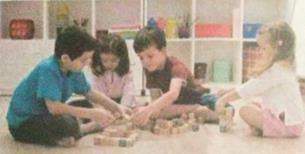 Children have a lot of special talents to offer. Their pursuit of novelty and wonder is both a cause and an effect—a gift of the life fully lived and one of the things that make life worth living. Anyone who knows children can tell you that they do the following:
Children follow their interests. If a kid is bored, you know it. None of this polite interest stuff the rest of us get stuck in. What they like, they do, and this teaches them that following what they like makes them happy—so they do it some more.
Children seek out and risk experimenting with new things. If kids are confronted with something unfamiliar, they will take a chance and try it out. They prod and poke it, smell it, look at it from all angles, try using it in different ways, look to see what you think about it—maybe even give it to you to see what you do with it. We adults, by contrast, slap a label in it, say, “I know what that is,” and dismiss it. What we’re really saying is, “I know what I already know about that, and there’s nothing more worth knowing,” which is almost never true of anything or anyone.
Children pay attention to their own rhythms. We grown-ups tend to drive ourselves until something’s done, or until a certain hour strikes, but children do things when they feel like it. Naturally, since someone else tends to their necessities, they may have more time and freedom to do that, but we would do well to follow their lead where we have the choice. When we work during our most productive times and rest during our other times, we make the most of our energies. That means if we do our best work between 4 p.m. and 2 a.m., then we should strive to arrange our day to make use of those hours. We become more trustworthy to ourselves and others.
Children honor dreams and daydreams. Children pay attention to, talk about, and follow up on their dreams and fantasies. They may draw pictures the say in their dreams, conduct conversations with dream characters, and try to recreate something experienced in dreams and daydreams. These are all creative acts. Moreover, they are important: Mankind has learned that dreams are a language the subconscious uses to communicate to the conscious. Many people say they don’t remember their dreams, but I know of no serious effort to connect with one’s dream life that hasn’t succeeded. Those who succeed often report an experience of waking and sleeping that is like living two lives, each one feeding and nourishing the other.
Children consider mistakes as information, rather than as something unsuccessful. “That’s a way it doesn’t work. I wonder how else it doesn’t work?” For children, the process of figuring something out is in itself a win. We, however, are hung up on outcomes, so we lay judgements on our mistakes—“We did it wrong” and what is worse, we take it further—therefore, “People won’t love us,” “We’re never good enough,” and “We’ll be all alone.” No wonder mistakes frighten some of us so deeply. Patterns like that aren’t learned overnight, and changing them may take a few tries, but they can be changed.
Children play. Kids make a game out of everything. Their essential business is play, so to speak. They delight in spoofing each other, parents, and personalities. They love to mimic, pretend, wrestle, hide and seek, surprise, and play practical jokes. They love to laugh, tell secrets, devise stories of goblins and fairies and giants and monsters and heroes. They’re not hung up on accuracy. When in doubt, they know they can always make it up. Many adults, however, have withdrawn permission from themselves to be silly, to expose the part of themselves that feels young.
Questions 66 to 70
Answer the following questions with the information given in the passage.
Questions 66 to 70 are based on the following passage.
Children have a lot of special talents to offer. Their pursuit of novelty and wonder is both a cause and an effect—a gift of the life fully lived and one of the things that make life worth living. Anyone who knows children can tell you that they do the following:Children follow their interests. If a kid is bored, you know it. None of this polite interest stuff the rest of us get stuck in. What they like, they do, and this teaches them that following what they like makes them happy—so they do it some more.
Children seek out and risk experimenting with new things. If kids are confronted with something unfamiliar, they will take a chance and try it out. They prod and poke it, smell it, look at it from all angles, try using it in different ways, look to see what you think about it—maybe even give it to you to see what you do with it. We adults, by contrast, slap a label in it, say, “I know what that is,” and dismiss it. What we’re really saying is, “I know what I already know about that, and there’s nothing more worth knowing,” which is almost never true of anything or anyone.
Children pay attention to their own rhythms. We grown-ups tend to drive ourselves until something’s done, or until a certain hour strikes, but children do things when they feel like it. Naturally, since someone else tends to their necessities, they may have more time and freedom to do that, but we would do well to follow their lead where we have the choice. When we work during our most productive times and rest during our other times, we make the most of our energies. That means if we do our best work between 4 p.m. and 2 a.m., then we should strive to arrange our day to make use of those hours. We become more trustworthy to ourselves and others.
Children honor dreams and daydreams. Children pay attention to, talk about, and follow up on their dreams and fantasies. They may draw pictures the say in their dreams, conduct conversations with dream characters, and try to recreate something experienced in dreams and daydreams. These are all creative acts. Moreover, they are important: Mankind has learned that dreams are a language the subconscious uses to communicate to the conscious. Many people say they don’t remember their dreams, but I know of no serious effort to connect with one’s dream life that hasn’t succeeded. Those who succeed often report an experience of waking and sleeping that is like living two lives, each one feeding and nourishing the other.
Children consider mistakes as information, rather than as something unsuccessful. “That’s a way it doesn’t work. I wonder how else it doesn’t work?” For children, the process of figuring something out is in itself a win. We, however, are hung up on outcomes, so we lay judgements on our mistakes—“We did it wrong” and what is worse, we take it further—therefore, “People won’t love us,” “We’re never good enough,” and “We’ll be all alone.” No wonder mistakes frighten some of us so deeply. Patterns like that aren’t learned overnight, and changing them may take a few tries, but they can be changed.
Children play. Kids make a game out of everything. Their essential business is play, so to speak. They delight in spoofing each other, parents, and personalities. They love to mimic, pretend, wrestle, hide and seek, surprise, and play practical jokes. They love to laugh, tell secrets, devise stories of goblins and fairies and giants and monsters and heroes. They’re not hung up on accuracy. When in doubt, they know they can always make it up. Many adults, however, have withdrawn permission from themselves to be silly, to expose the part of themselves that feels young.
Questions 66 to 70
Answer the following questions with the information given in the passage.
36
What is called a gift in the passage?
37
How do kids look at something new or unfamiliar?
38
Which word denotes a regular repeated pattern of sounds or movements?
39
What may children try to recapture?
40
What do children think or worry little about as they do something for amusement?
Section D (10 marks)
Questions 71 to 75 are based on the following passage. Way back in 1582, some Italian scientists noted, with dismay, that there was something very wrong with their calendar. Watching the position of the sun they knew that there was a certain spot on which the sun should shine on March 21, but it actually got there on March 11—ten days too soon.
For some time it had been known that the calendar was running fast. Finally, Pope Gregory ⅩⅢ was asked to make an official correction. The Pope agreed that the calendar had to be corrected, and that a better system had to be developed so that it would not run fast in the future.
It was easy enough to drop ten days from the calendar to make it correct again with the sun. But, how was the calendar to be kept right in the future, year after year?
The scientists figured one way, and then they figured another. But no matter how much mathematics they did, the answer never came out to an even figure. Finally, it was decided to continue counting every fourth year as a leap year (which the early Romans had introduced), but to skip every century year that cannot be divided by 400.
For example, the year 1600 was a leap year because it can be divided equally by 400. But 1700 was not; neither was 1800, nor 1900. Is the year 2000 a leap year? Yes, because it can be divided by 400. By this rearrangement of the leap-year schedule the calendar was slowed down.
This is the system we now use, and our calendar, named after the pope, is called the Gregorian calendar. Although it is not quite perfect (it is 26 seconds fast each year, according to sun time), it will be nearly three thousand years before our calendar will run fast by one whole day. So it won’t worry us, that’s for sure.
Most countries now use Pope Gregory’s calendar, but it took a long time before many were willing to change their old-style calendars. It was not until 170 years later that the English government corrected its calendar. This was done in 1752, and by that time the calendar had to be set back by eleven whole days. The change was made in September so that the day after September 2 became September 14.
Of course, some people got confused; some complained; and some were angry. Families who rented houses by the month, or people who had borrowed money on which they paid interest, grumbled that they had been cheated. They had to pay the full rate for a month that had been cut short by eleven days.
The difficulty of getting accustomed to the new calendar was increased because, at the same time the eleven days were dropped, a new date was fixed for starting a new year. Instead of March 25, people were told that the new year would start on January 1.
The dates for private celebrations, such as birthdays or anniversaries, also had to be adjusted according to the new-style calendar. Eleven days had to be added. For instance, George Washington’s birthday was February 11 according to the old-style calendar, but according to the new calendar it became February 22. Even today, the letters “O.S.” appear in many books after certain dates. George Washington’s birthday may be printed as February 22 (February 11, O.S.).
Today, people seem to be content using the Gregorian calendar. There is talk, however, of a new World Calendar in which holidays would always be celebrated on the same day of the week. In order to do this, changes would have to be made in the number of days in each month—changes which most people would probably rather not make.
Questions 71 to 75
Complete the summary below with information from the passage, using no more than three words for each blank.
In 1582, (71) _____ cut down ten days to make an official calendar correction. The scientists decided to continue counting every fourth year as a leap year, but to skip every century year that cannot be divided by (72) _____. But even the Gregorian calendar is not accurate because it is 26 seconds fast every year according to (73) _____. In 1752, the English government made the calendar correction in the month of (74) _____. Due to the changes in calendar, the shortened term “O.S.”, which stands for (75) _____, appeared in many books. Today, people are happy with the Gregorian calendar, though a new World Calendar is being taken into consideration.
Questions 71 to 75 are based on the following passage.
Way back in 1582, some Italian scientists noted, with dismay, that there was something very wrong with their calendar. Watching the position of the sun they knew that there was a certain spot on which the sun should shine on March 21, but it actually got there on March 11—ten days too soon.For some time it had been known that the calendar was running fast. Finally, Pope Gregory ⅩⅢ was asked to make an official correction. The Pope agreed that the calendar had to be corrected, and that a better system had to be developed so that it would not run fast in the future.
It was easy enough to drop ten days from the calendar to make it correct again with the sun. But, how was the calendar to be kept right in the future, year after year?
The scientists figured one way, and then they figured another. But no matter how much mathematics they did, the answer never came out to an even figure. Finally, it was decided to continue counting every fourth year as a leap year (which the early Romans had introduced), but to skip every century year that cannot be divided by 400.
For example, the year 1600 was a leap year because it can be divided equally by 400. But 1700 was not; neither was 1800, nor 1900. Is the year 2000 a leap year? Yes, because it can be divided by 400. By this rearrangement of the leap-year schedule the calendar was slowed down.
This is the system we now use, and our calendar, named after the pope, is called the Gregorian calendar. Although it is not quite perfect (it is 26 seconds fast each year, according to sun time), it will be nearly three thousand years before our calendar will run fast by one whole day. So it won’t worry us, that’s for sure.
Most countries now use Pope Gregory’s calendar, but it took a long time before many were willing to change their old-style calendars. It was not until 170 years later that the English government corrected its calendar. This was done in 1752, and by that time the calendar had to be set back by eleven whole days. The change was made in September so that the day after September 2 became September 14.
Of course, some people got confused; some complained; and some were angry. Families who rented houses by the month, or people who had borrowed money on which they paid interest, grumbled that they had been cheated. They had to pay the full rate for a month that had been cut short by eleven days.
The difficulty of getting accustomed to the new calendar was increased because, at the same time the eleven days were dropped, a new date was fixed for starting a new year. Instead of March 25, people were told that the new year would start on January 1.
The dates for private celebrations, such as birthdays or anniversaries, also had to be adjusted according to the new-style calendar. Eleven days had to be added. For instance, George Washington’s birthday was February 11 according to the old-style calendar, but according to the new calendar it became February 22. Even today, the letters “O.S.” appear in many books after certain dates. George Washington’s birthday may be printed as February 22 (February 11, O.S.).
Today, people seem to be content using the Gregorian calendar. There is talk, however, of a new World Calendar in which holidays would always be celebrated on the same day of the week. In order to do this, changes would have to be made in the number of days in each month—changes which most people would probably rather not make.
Questions 71 to 75
Complete the summary below with information from the passage, using no more than three words for each blank.
In 1582, (71) _____ cut down ten days to make an official calendar correction. The scientists decided to continue counting every fourth year as a leap year, but to skip every century year that cannot be divided by (72) _____. But even the Gregorian calendar is not accurate because it is 26 seconds fast every year according to (73) _____. In 1752, the English government made the calendar correction in the month of (74) _____. Due to the changes in calendar, the shortened term “O.S.”, which stands for (75) _____, appeared in many books. Today, people are happy with the Gregorian calendar, though a new World Calendar is being taken into consideration.
41
_____.
42
_____.
43
_____.
44
_____.
45
_____.
五、Part Ⅴ Translation
15 marks
46
Section A (5 marks)
Translate the following paragraph into Chinese.Remember to write the answers on the answersheet.
The Chinese garden is more than just flowers, rocks and pavilions.It stands as a monument of triumph of man’s effort to find his place in nature and to remain happy in it.The Chinese garden was at first added to the house as a subsidiary unit but later grew in importance and beauty to become its rival.In some cases the garden even surpasses the house in beauty and in importance.This evolution is not accidental, but the flowering of a civilization which cherishes the ideal of fellowship between nature and man.This understanding is fundamental to our appreciation of the Chinese garden.
Translate the following paragraph into Chinese.Remember to write the answers on the answersheet.
The Chinese garden is more than just flowers, rocks and pavilions.It stands as a monument of triumph of man’s effort to find his place in nature and to remain happy in it.The Chinese garden was at first added to the house as a subsidiary unit but later grew in importance and beauty to become its rival.In some cases the garden even surpasses the house in beauty and in importance.This evolution is not accidental, but the flowering of a civilization which cherishes the ideal of fellowship between nature and man.This understanding is fundamental to our appreciation of the Chinese garden.
47
Section B (10 marks)
Translate the underlined sentences into English by using the hints given in brackets.Remember to write the answers on the answersheet.
英国人的矜持和美国人的张扬体现在文学作品中。通过分析过去一个世纪英语书籍的数字化文本,可以得出这样的结论:77.自20世纪80年代以来,美国书籍中传达情感内容的单词已变得比英国书籍中常见得多。英国布里斯托大学人类学家阿尔伯托阿瑟比及其同事利用谷歌数据库对500多万本过去几个世纪的书籍进行了数字扫播。78.这—数据库先前已用于检视文体的演变和个人主义的文学表达趋势。这种由新技术支持的文化信息采掘被称为“文化组学”。79.它的倡导者们认为,这些方法可以揭示社会舆论和规范的趋势,若不挖掘,它们就会被淹没在大量数据的海洋中。80.书籍中的语言使用反映了人们在特定时代的所谈所思。近几十年来,英美作家的情感表达方式已渐行渐远。研究者发现,81.尽管整体呈下降趋势,但是自1980年代以来,情感词汇在美国文本中的使用比英国书籍中的相对更加频繁。
Translate the underlined sentences into English by using the hints given in brackets.Remember to write the answers on the answersheet.
英国人的矜持和美国人的张扬体现在文学作品中。通过分析过去一个世纪英语书籍的数字化文本,可以得出这样的结论:77.自20世纪80年代以来,美国书籍中传达情感内容的单词已变得比英国书籍中常见得多。英国布里斯托大学人类学家阿尔伯托阿瑟比及其同事利用谷歌数据库对500多万本过去几个世纪的书籍进行了数字扫播。78.这—数据库先前已用于检视文体的演变和个人主义的文学表达趋势。这种由新技术支持的文化信息采掘被称为“文化组学”。79.它的倡导者们认为,这些方法可以揭示社会舆论和规范的趋势,若不挖掘,它们就会被淹没在大量数据的海洋中。80.书籍中的语言使用反映了人们在特定时代的所谈所思。近几十年来,英美作家的情感表达方式已渐行渐远。研究者发现,81.尽管整体呈下降趋势,但是自1980年代以来,情感词汇在美国文本中的使用比英国书籍中的相对更加频繁。
六、Part Ⅵ EC
10 marks(Error Correction)
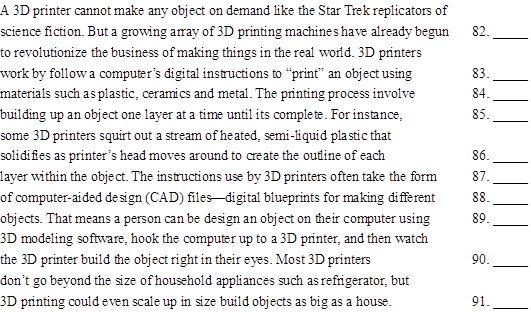
48
_____.
49
_____.
50
_____.
51
_____.
52
_____.
53
_____.
54
_____.
55
_____.
56
_____.
57
_____.
七、Part Ⅶ IQ Test
10 marks
58
Rearrange the muddled letters in capitals to make a proper word.The answer will complete the sentence sensibly.

59
Fill in the missing letters and numbers.The alphabet has been written out to help you.
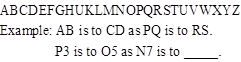
60
Here are some symbol codes for four words.Match the right code to the word KIND.
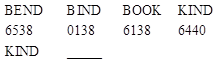
61
Change the first word into the last word, by changing one letter at a time and making a new, different word in the middle.
PINE PICK
PINE PICK
62
Fill in the crosswords so that all the given words are included.You have been given one letter as a clue in the crossword.
DARES ANGER BRAIN BEARD NOTES

DARES ANGER BRAIN BEARD NOTES
八、Part Ⅷ Writing
30 marks
63
Section A (10 marks)
While the vast majority of UFO (unidentified flying object) sightings, when investigated, have turned out to be the result of ordinary earthly phenomena, such as weather balloons, flares or rockets, some still leave experts scratching their heads.The following picture shows one of the mysterious phenomena.
Write your comments on UFO in at least 100 words on the answer sheet.
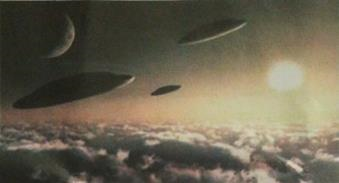
While the vast majority of UFO (unidentified flying object) sightings, when investigated, have turned out to be the result of ordinary earthly phenomena, such as weather balloons, flares or rockets, some still leave experts scratching their heads.The following picture shows one of the mysterious phenomena.
Write your comments on UFO in at least 100 words on the answer sheet.
64
Section B (20 marks)
Write on the following topic.
Building a better world for all is China’s mission.Bright prospects for the commons are what the Chinese leader sought to convey in his key-note speech at the world political parties dialogue recently, in which he accentuated his proposal that countries work together to build a community of shared future for all mankind.
Read the above sentences.How do you understand the news? Write an essay of nolessthan160 words on the answersheet to express your personal views on the issue.
Write on the following topic.
Building a better world for all is China’s mission.Bright prospects for the commons are what the Chinese leader sought to convey in his key-note speech at the world political parties dialogue recently, in which he accentuated his proposal that countries work together to build a community of shared future for all mankind.
Read the above sentences.How do you understand the news? Write an essay of nolessthan160 words on the answersheet to express your personal views on the issue.
输入阅读码
查看答案与解析需要输入阅读码