2018年全国英语竞赛《B类英语专业》初赛试题(网友回忆版)
B类英语专业
历年真题
共 64 题
3263 次浏览
更新于 2026-09-26
二、Part Ⅱ Vocabulary
15 marks
1
There’s a good antiques market here _____ Sundays.
- A.over
- B.by
- C.in
- D.on
2
I can’t _____ with racial prejudice of any form.
- A.put on
- B.put up
- C.put down
- D.put in
3
The thieves _____ the papers all over the room while they were searching for the diamond ring.
- A.spread
- B.scratched
- C.scattered
- D.burned
4
It is from the earliest times _____ humans have studied the world around them with interest.
- A.which
- B.where
- C.that
- D.how
5
Without a doubt, _____ the key issue in the President’s campaign.
- A.taxation is going to be
- B.is going taxation to be
- C.is going to be taxation
- D.is taxation going to be
6
The spellings of many old English words have been _____ in the living language, although their pronunciations have changed.
- A.extrvacted
- B.preserved
- C.revised
- D.improved
7
_____ choose to live in or near metropolitan areas simply because they like the rapid pace of city life.
- A.Large numbers of people
- B.So large numbers of people to
- C.There are large numbers of people
- D.Large numbers of people who
8
In scientific inquiry, it becomes a matter of duty to expose a _____ hypothesis to every possible kind of examination.
- A.debatable
- B.well-established
- C.tentative
- D.logical
9
The results of the experiments performed by Elizabeth and Rachel were _____ in that they not only challenged old assumptions but called the prevailing methodology into question.
- A.predictable
- B.inconclusive
- C.impractical
- D.provocative
10
_____ down than the telephone rang.
- A.Not until he lay
- B.No sooner had he lain
- C.Hardly he had lain
- D.Scarcely did he lie
11
According to the psychoanalyst Sigmund Freud, wisdom comes from the _____ of maturity.
- A.approach
- B.achievement
- C.appearance
- D.production
12
Well, to continue, _____, there is also research that demonstrates that individuals perform worse, not better, on tasks when other people are there.
- A.as I mentioned earlier
- B.as is known to all
- C.as time passed
- D.as you can imagine
13
—Hello.You must be Len.I’m Bill, Kate’s husband.
—Oh, hello, Bill.Nice to meet you.Thanks for inviting me.
—You’re welcome.Kate and I thought it was about time we had a get-together and met each other’s work colleagues.Kate tells me _____.
—Yes.I’ve been there about for only a month.Kate’s been very helpful, showing me the ropes.
—Oh, hello, Bill.Nice to meet you.Thanks for inviting me.
—You’re welcome.Kate and I thought it was about time we had a get-together and met each other’s work colleagues.Kate tells me _____.
—Yes.I’ve been there about for only a month.Kate’s been very helpful, showing me the ropes.
- A.you’ve set up a new company
- B.you’re visiting our company
- C.you’ve just joined the company
- D.you’re having a good time in the company
14
—What seems to be the problem?
—Well, actually, it’s my son.He’s had a fever since Wednesday and he’s been throwing up.He’s picked up a bit today but he’s still under the weather.
—Mm.He could have the bug that’s going around.Pop him on the table and I’ll _____.
—Well, actually, it’s my son.He’s had a fever since Wednesday and he’s been throwing up.He’s picked up a bit today but he’s still under the weather.
—Mm.He could have the bug that’s going around.Pop him on the table and I’ll _____.
- A.take his temperature
- B.give him a few pills
- C.calm him down a bit
- D.give him a check up
15
—OK.Here’re the departures.What’s our flight number again?
—It’s MU909.The boarding pass says it leaves from Gate B-12.
—Let’s see, MU909,Gate B -12.There it is.Oh, no! The flight’s been delayed.It won’t leave until 9:19! And _____.
—Nine-nineteen! That’s three hours from now! What are we going to do with the three hours?
—It’s MU909.The boarding pass says it leaves from Gate B-12.
—Let’s see, MU909,Gate B -12.There it is.Oh, no! The flight’s been delayed.It won’t leave until 9:19! And _____.
—Nine-nineteen! That’s three hours from now! What are we going to do with the three hours?
- A.we need to check our baggage
- B.the gate’s been changed to C-9
- C.I can’t find my boarding pass
- D.let’s go through the security check
三、Part Ⅲ Cloze
10 marks
I once asked advertising legend Carl Ally what makes the creative person tick.Ally (46) res_____, “The creative person wants to be a know-it-all.He wants to know about all kinds of things: ancient history, nineteenth century mathematics, current manufacturing techniques, flower arranging, and hog futures.Because he never knows when these ideas might come together to form a new idea.It may happen six minutes (47) la_____ or six years down the road.But he has faith that it will happen.” I agree wholeheartedly.Knowledge is the stuff from which new ideas are (48) _____ (make).Nonetheless, knowledge alone won’t make a person creative.I think that we’ve all known people (49) _____ knew lots of facts and nothing creative happened.Their knowledge just sat in their crania because they didn’t think about what they knew in any new ways.The real key to being creative lies in what you do with your knowledge.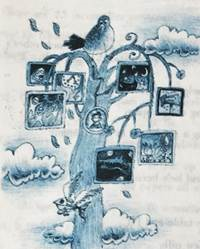 Creative thinking (50) req_____ an attitude that allows you to search for ideas and manipulate your knowledge and experience.With this outlook, you try various approaches, first one, then another, often not getting anywhere.You use crazy, foolish, and impractical ideas as stepping stones to practical new ideas.You break the rules (51) _____ (occasion), and explore for ideas in unusual outside places.In short, by adopting a creative outlook you open yourself up both to new possibilities and to change.A good example of a person who did this is Johann Gutenberg.What Gutenberg did was combine two previously unconnected ideas: the wine press and the coin punch.The purpose of the coin punch was to leave an image on a small area such as a gold coin.The (52) fun_____ of the wine press was, and still is, to apply force over a large area to squeeze the juice out of grapes.One day, Gutenberg, perhaps after he drunk a goblet or two of wine, playfully asked himself, What if I took a bunch of these coin punches and put them under the force of the wine press so that they (53) _____ (leave) their image on paper? The resulting combination was the printing press and movable type.Navy Admiral Grace Hopper had the task of explaining the meaning of a nanosecond to some nontechnical computer users.A nanosecond is a billionth of a second, and it’s the basic (54) ti_____ interval of a supercomputers internal clock.She wondered, “How can I get them to understand the brevity of a nanosecond? Why not look at it (55) _____ a space problem rather than a time problem? I’ll just use the distance light travels in one billionth of a second.” She pulled out a piece of string 30 centimeters long and told her visitors, “Here is one nanosecond.”
Creative thinking (50) req_____ an attitude that allows you to search for ideas and manipulate your knowledge and experience.With this outlook, you try various approaches, first one, then another, often not getting anywhere.You use crazy, foolish, and impractical ideas as stepping stones to practical new ideas.You break the rules (51) _____ (occasion), and explore for ideas in unusual outside places.In short, by adopting a creative outlook you open yourself up both to new possibilities and to change.A good example of a person who did this is Johann Gutenberg.What Gutenberg did was combine two previously unconnected ideas: the wine press and the coin punch.The purpose of the coin punch was to leave an image on a small area such as a gold coin.The (52) fun_____ of the wine press was, and still is, to apply force over a large area to squeeze the juice out of grapes.One day, Gutenberg, perhaps after he drunk a goblet or two of wine, playfully asked himself, What if I took a bunch of these coin punches and put them under the force of the wine press so that they (53) _____ (leave) their image on paper? The resulting combination was the printing press and movable type.Navy Admiral Grace Hopper had the task of explaining the meaning of a nanosecond to some nontechnical computer users.A nanosecond is a billionth of a second, and it’s the basic (54) ti_____ interval of a supercomputers internal clock.She wondered, “How can I get them to understand the brevity of a nanosecond? Why not look at it (55) _____ a space problem rather than a time problem? I’ll just use the distance light travels in one billionth of a second.” She pulled out a piece of string 30 centimeters long and told her visitors, “Here is one nanosecond.”
16
_____.
17
_____.
18
_____.
19
_____.
20
_____.
21
_____.
22
_____.
23
_____.
24
_____.
25
_____.
四、Part Ⅳ RC
30 marks(Reading Comprehension)
Section A (5 marks)
“I believe I can build a human liver,” proclaims an exhausted Dr.Joseph Vacanti, collapsing into his office chair at Children’s Hospital in Boston.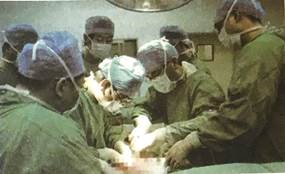 There’s something disquieting about hearing a doctor say such a thing.One can’t help thinking ghastly monster created by Dr.Frankenstein, with its translucent yellow skin, shriveled face and black misshapen lips.
But Dr.Vacanti is no Dr.Frankenstein.Still in his scrubs, he has just come from the operating room where he performed lifesaving surgery on an infant.His body is spent, but his eyes flash with energy as he talks about his dream, “It has never seemed like science fiction to me,” says Vacanti, a professor of surgery at Harvard Medical School and Massachusetts General Hospital.“My professional goal is to solve the problem of vital organ shortage.” More than 50,000 Americans are currently in need of organ transplants, and 4,000 of them are likely to die before a donor is located.Vacanti’s solution is simple: Instead of replacing a faltering organ with one harvested from someone else, why not take a few healthy cells from the sick person and grow him or her a new one? Such an organ would probably work better, too, since the body is less likely to reject tissue made of its own genetic material.
It sounds too good to be true.But it’s beginning to look like it just might work.And if it does, tissue regeneration could revolutionize the practice of medicine.
Apothecaries have experimented with tissue replacement for centuries: As early as the sixth century B.C., Hindu surgeons began using arm skin to repair mangled noses.It wasn’t until the late 1970s that John Burke of Massachusetts General Hospital and Ioannis Yannas of the Massachusetts Institute of Technology succeeded in growing skin in a laboratory.Recently, several brands of artificial skin have been approved by the Food and Drug Administration for treatment of ulcers and severe burns.
Still, as an organized field of inquiry, with an international professional society and a journal to report its progress, the science of tissue engineering has been around for little more than a decade.There is quite a difference between growing a relatively simple organ such as skin and growing a complex one like a liver.For the liver is a congeries of many different types of tissues, all of which work together to accomplish a host of complicated tasks.“When I started trying to do this,” says Vacanti, 49, the son of a Nebraska dental surgeon, “a lot of people thought I was crazy.Some still think so.”
Questions 56 to 60
Complete the table using no more than three words for each blank.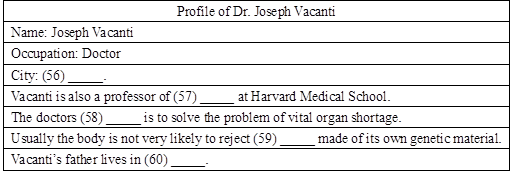
“I believe I can build a human liver,” proclaims an exhausted Dr.Joseph Vacanti, collapsing into his office chair at Children’s Hospital in Boston.
There’s something disquieting about hearing a doctor say such a thing.One can’t help thinking ghastly monster created by Dr.Frankenstein, with its translucent yellow skin, shriveled face and black misshapen lips.But Dr.Vacanti is no Dr.Frankenstein.Still in his scrubs, he has just come from the operating room where he performed lifesaving surgery on an infant.His body is spent, but his eyes flash with energy as he talks about his dream, “It has never seemed like science fiction to me,” says Vacanti, a professor of surgery at Harvard Medical School and Massachusetts General Hospital.“My professional goal is to solve the problem of vital organ shortage.” More than 50,000 Americans are currently in need of organ transplants, and 4,000 of them are likely to die before a donor is located.Vacanti’s solution is simple: Instead of replacing a faltering organ with one harvested from someone else, why not take a few healthy cells from the sick person and grow him or her a new one? Such an organ would probably work better, too, since the body is less likely to reject tissue made of its own genetic material.
It sounds too good to be true.But it’s beginning to look like it just might work.And if it does, tissue regeneration could revolutionize the practice of medicine.
Apothecaries have experimented with tissue replacement for centuries: As early as the sixth century B.C., Hindu surgeons began using arm skin to repair mangled noses.It wasn’t until the late 1970s that John Burke of Massachusetts General Hospital and Ioannis Yannas of the Massachusetts Institute of Technology succeeded in growing skin in a laboratory.Recently, several brands of artificial skin have been approved by the Food and Drug Administration for treatment of ulcers and severe burns.
Still, as an organized field of inquiry, with an international professional society and a journal to report its progress, the science of tissue engineering has been around for little more than a decade.There is quite a difference between growing a relatively simple organ such as skin and growing a complex one like a liver.For the liver is a congeries of many different types of tissues, all of which work together to accomplish a host of complicated tasks.“When I started trying to do this,” says Vacanti, 49, the son of a Nebraska dental surgeon, “a lot of people thought I was crazy.Some still think so.”
Questions 56 to 60
Complete the table using no more than three words for each blank.
26
_____.
27
_____.
28
_____.
29
_____.
30
_____.
Section B (10 marks)
Questions 61 to 65 are based on the following passage.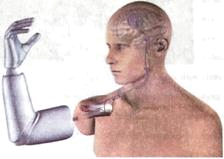 Technology changes the way people live.This article is about using thought to control machines.Brain-computer interfaces may change what it means to be human.
(61) _____ For William Kochevar, the term is justified.Mr Kochevar is paralysed below the shoulders after a cycling accident, yet has managed to feed himself by his own hand.This remarkable feat is partly thanks to electrodes, implanted in his right arm, which stimulate muscles.But the real magic lies higher up.Mr Kochevar can control his arm using the power of thought.His intention to move is reflected in neural activity in his motor cortex; these signals are detected by implants in his brain and processed into commands to activate the electrodes in his arms.
(62) _____.But brain-computer interfaces (BCIs) like the BrainGate system used by Mr Kochevar provide evidence that mind-control can work.Researchers are able to tell what words and images people have heard and seen from neural activity alone.Information can also be encoded and used to stimulate the brain.Over 300,000 people have cochlear implants, which help them to hear by converting sound into electrical signals and sending them into the brain.Scientists have “injected” data into monkeys, heads, instructing them to perform actions via electrical pulses.
(63) _____.Both America’s armed forces and Silicon Valley are starting to focus on the brain.Facebook dreams of thought -to -text typing.Kernel, a startup, has $l00m to spend on neurotechnology.Elon Musk has formed a firm called Neuralink; he thinks that, if humanity is to survive the advent of artificial intelligence, it needs an upgrade.Entrepreneurs envisage a world in which people can communicate telepathically, with each other and with machines, or acquire superhuman abilities, such as hearing at very high frequencies.
(64) _____.But well before then, BCIs could open the door to remarkable new applications.Imagine stimulating the visual cortex to help the blind, forging new neural connections in stroke victims or monitoring the brain for signs of depression.By turning the firing of neurons into a resource to be harnessed, BCIs may change the idea of what it means to be human.
(65) _____.The brain is still a foreign country.Scientists know little about how exactly it works, especially when it comes to complex functions like memory formation.Research is more advanced in animals, but experiments on humans are hard.Yet, even today, some parts of the brain, like the motor cortex, are better understood.Nor is complete knowledge always needed.Machine learning can recognize patterns of neural activity, the brain itself gets the hang of controlling BCIS with extraordinary ease.And neurotechnology will reveal more of the brain’s secrets.
Questions 61 to 65
Choose from the sentences A—G the one which best fits each gap of 61—65.There are two extra sentences which you do not need to use.
Questions 61 to 65 are based on the following passage.
Technology changes the way people live.This article is about using thought to control machines.Brain-computer interfaces may change what it means to be human.(61) _____ For William Kochevar, the term is justified.Mr Kochevar is paralysed below the shoulders after a cycling accident, yet has managed to feed himself by his own hand.This remarkable feat is partly thanks to electrodes, implanted in his right arm, which stimulate muscles.But the real magic lies higher up.Mr Kochevar can control his arm using the power of thought.His intention to move is reflected in neural activity in his motor cortex; these signals are detected by implants in his brain and processed into commands to activate the electrodes in his arms.
(62) _____.But brain-computer interfaces (BCIs) like the BrainGate system used by Mr Kochevar provide evidence that mind-control can work.Researchers are able to tell what words and images people have heard and seen from neural activity alone.Information can also be encoded and used to stimulate the brain.Over 300,000 people have cochlear implants, which help them to hear by converting sound into electrical signals and sending them into the brain.Scientists have “injected” data into monkeys, heads, instructing them to perform actions via electrical pulses.
(63) _____.Both America’s armed forces and Silicon Valley are starting to focus on the brain.Facebook dreams of thought -to -text typing.Kernel, a startup, has $l00m to spend on neurotechnology.Elon Musk has formed a firm called Neuralink; he thinks that, if humanity is to survive the advent of artificial intelligence, it needs an upgrade.Entrepreneurs envisage a world in which people can communicate telepathically, with each other and with machines, or acquire superhuman abilities, such as hearing at very high frequencies.
(64) _____.But well before then, BCIs could open the door to remarkable new applications.Imagine stimulating the visual cortex to help the blind, forging new neural connections in stroke victims or monitoring the brain for signs of depression.By turning the firing of neurons into a resource to be harnessed, BCIs may change the idea of what it means to be human.
(65) _____.The brain is still a foreign country.Scientists know little about how exactly it works, especially when it comes to complex functions like memory formation.Research is more advanced in animals, but experiments on humans are hard.Yet, even today, some parts of the brain, like the motor cortex, are better understood.Nor is complete knowledge always needed.Machine learning can recognize patterns of neural activity, the brain itself gets the hang of controlling BCIS with extraordinary ease.And neurotechnology will reveal more of the brain’s secrets.
Questions 61 to 65
Choose from the sentences A—G the one which best fits each gap of 61—65.There are two extra sentences which you do not need to use.
31
_____.
- A.As our Technology Quarterly in this issue explains, the pace of research into BCIs and the scale of its ambition are increasing.
- B.The degree of drought is largely a function of temperature and drainage.
- C.Technologies are often billed as transformative.
- D.These powers, if they ever materialize, are decades away.
- E.Nintendo is promising there will be 5 to 10 games available for the machine initially.
- F.Clear the technological barrier, and another one looms.
- G.An ability to decode thought in this way may sound like science fiction.
32
_____.
- A.As our Technology Quarterly in this issue explains, the pace of research into BCIs and the scale of its ambition are increasing.
- B.The degree of drought is largely a function of temperature and drainage.
- C.Technologies are often billed as transformative.
- D.These powers, if they ever materialize, are decades away.
- E.Nintendo is promising there will be 5 to 10 games available for the machine initially.
- F.Clear the technological barrier, and another one looms.
- G.An ability to decode thought in this way may sound like science fiction.
33
_____.
- A.As our Technology Quarterly in this issue explains, the pace of research into BCIs and the scale of its ambition are increasing.
- B.The degree of drought is largely a function of temperature and drainage.
- C.Technologies are often billed as transformative.
- D.These powers, if they ever materialize, are decades away.
- E.Nintendo is promising there will be 5 to 10 games available for the machine initially.
- F.Clear the technological barrier, and another one looms.
- G.An ability to decode thought in this way may sound like science fiction.
34
_____.
- A.As our Technology Quarterly in this issue explains, the pace of research into BCIs and the scale of its ambition are increasing.
- B.The degree of drought is largely a function of temperature and drainage.
- C.Technologies are often billed as transformative.
- D.These powers, if they ever materialize, are decades away.
- E.Nintendo is promising there will be 5 to 10 games available for the machine initially.
- F.Clear the technological barrier, and another one looms.
- G.An ability to decode thought in this way may sound like science fiction.
35
_____.
- A.As our Technology Quarterly in this issue explains, the pace of research into BCIs and the scale of its ambition are increasing.
- B.The degree of drought is largely a function of temperature and drainage.
- C.Technologies are often billed as transformative.
- D.These powers, if they ever materialize, are decades away.
- E.Nintendo is promising there will be 5 to 10 games available for the machine initially.
- F.Clear the technological barrier, and another one looms.
- G.An ability to decode thought in this way may sound like science fiction.
Section C (10 marks)
Questions 66 to 70 are based on the following passage.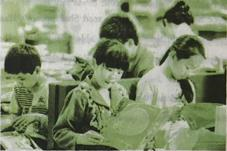 Reading or the enjoyment of books has always been regarded among the charms of a cultured life and is respected and envied by those who rarely give themselves that privilege. This is easy to understand when we compare the difference between the life of a man who does no reading and that of a man who does. The man who does not have the habit of reading is imprisoned in his immediate world, in respect to time and space. His life falls into a set routine; he is limited to contact and conversation with a few friends and acquaintances, and he sees only what happens in his immediate neighborhood. From this prison there is no escape. But the moment he takes up a book, he immediately enters a different world, and if it is a good book, he is immediately put in touch with one of the best talkers of the world. This talker leads him on and carries him into a different country or a different age, or unburdens to him some of his personal regrets, or discusses with him some special line or aspect of life that the reader knows nothing about. An ancient author puts him in communion with a dead spirit of long age, and as he reads along, he begins to imagine what that ancient and what type of person he was. Both Mencius and Ssuma Ch’ien, China’s greatest historian, have the same idea. Now to be able to live two hours out of twelve in a different world and take one’s thoughts off the claims of the immediate present is, of course, a privilege to be envied by people shut up in their bodily prison. Such a change of environment is really similar to travel in its psychological effect.
But there is more to it than this. The reader is always carried away into a world of thought and reflection. Even if it is a book about physical events, there is a difference between seeing such events in person or living through them, and reading about them in books, for then the events always assume the quality of the spectacle and the reader becomes a detached spectator. The best reading is therefore that which leads us into this contemplative mood, and not that which is merely occupied with the report of events. The tremendous amount of time spent on newspapers I regard as not reading at all, for the average readers of papers are mainly concerned with getting reports about events and happenings without contemplative value.
The best formula for the object of reading, in my opinion, was stated by Huang Shanku, a Sung poet and friend of Su Tungp’o. He said, “A scholar who hasn’t read anything for three days feels that his talk has no flavor, and his own face becomes hateful to look at in the mirror.” What he means, of course, is that reading gives a man a certain charm and flavor, which is the entire object of reading, and only reading with this object can be called an art. One doesn’t read to “improve one’s mind,” because when one begins to think of improving his mind, all the pleasure of reading is gone. He is the type of person who says to himself. “I must read Shakespeare, and I must read Sophocles, and I must read the entire Five-foot Shelf of Dr. Eliot, so I can become an educated man.” I’m sure that man will never become educated. He will force himself one evening to read Shakespeare’s Hamlet and come away, as if from a bad dream, with no greater benefit than that he is able to say that he had “read” Hamlet. Anyone who reads a book with a sense of obligation does not understand the art of reading.
Questions 66 to 70
Answer the following questions with the information given in the passage.
Questions 66 to 70 are based on the following passage.
Reading or the enjoyment of books has always been regarded among the charms of a cultured life and is respected and envied by those who rarely give themselves that privilege. This is easy to understand when we compare the difference between the life of a man who does no reading and that of a man who does. The man who does not have the habit of reading is imprisoned in his immediate world, in respect to time and space. His life falls into a set routine; he is limited to contact and conversation with a few friends and acquaintances, and he sees only what happens in his immediate neighborhood. From this prison there is no escape. But the moment he takes up a book, he immediately enters a different world, and if it is a good book, he is immediately put in touch with one of the best talkers of the world. This talker leads him on and carries him into a different country or a different age, or unburdens to him some of his personal regrets, or discusses with him some special line or aspect of life that the reader knows nothing about. An ancient author puts him in communion with a dead spirit of long age, and as he reads along, he begins to imagine what that ancient and what type of person he was. Both Mencius and Ssuma Ch’ien, China’s greatest historian, have the same idea. Now to be able to live two hours out of twelve in a different world and take one’s thoughts off the claims of the immediate present is, of course, a privilege to be envied by people shut up in their bodily prison. Such a change of environment is really similar to travel in its psychological effect.But there is more to it than this. The reader is always carried away into a world of thought and reflection. Even if it is a book about physical events, there is a difference between seeing such events in person or living through them, and reading about them in books, for then the events always assume the quality of the spectacle and the reader becomes a detached spectator. The best reading is therefore that which leads us into this contemplative mood, and not that which is merely occupied with the report of events. The tremendous amount of time spent on newspapers I regard as not reading at all, for the average readers of papers are mainly concerned with getting reports about events and happenings without contemplative value.
The best formula for the object of reading, in my opinion, was stated by Huang Shanku, a Sung poet and friend of Su Tungp’o. He said, “A scholar who hasn’t read anything for three days feels that his talk has no flavor, and his own face becomes hateful to look at in the mirror.” What he means, of course, is that reading gives a man a certain charm and flavor, which is the entire object of reading, and only reading with this object can be called an art. One doesn’t read to “improve one’s mind,” because when one begins to think of improving his mind, all the pleasure of reading is gone. He is the type of person who says to himself. “I must read Shakespeare, and I must read Sophocles, and I must read the entire Five-foot Shelf of Dr. Eliot, so I can become an educated man.” I’m sure that man will never become educated. He will force himself one evening to read Shakespeare’s Hamlet and come away, as if from a bad dream, with no greater benefit than that he is able to say that he had “read” Hamlet. Anyone who reads a book with a sense of obligation does not understand the art of reading.
Questions 66 to 70
Answer the following questions with the information given in the passage.
36
What is envied by those who do not read any books?
37
Who is the famous historian the author mentioned?
38
What does the author say is the best reading?
39
What did Huang Shanku say about reading?
40
According to the author, what kind of person does not understand the art of reading?
Section D (10 marks)
Questions 70 to 75 are based on the following passage.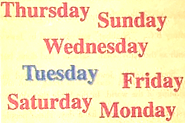 It’s handy to have a week—those seven days and seven nights—because it means we can plan what to do on certain days, and have order in our lives. But where did our week come from?
It is thought the idea of a week first came about because the farmers and tradesmen needed a certain amount of time within each month to bring their products to market. Meat, vegetables, and fruit would not stay fresh if there were long periods between market days. Among some west-African tribes, for example, a four-day week was observed, and the word for “week” was the same as that for “market.” In Central America, the market week was five days. The ancient Assyrians, who lived in what is now part of northern Iraq, had a market week of six days, and the Incas, who lived in ancient Peru, used a ten-day interval. Before the time of Julius Caesar, the Romans observed an eight-day period between market days.
Scheduled market days may have been where the concept of the week began. But how did the seven-day week develop? Could it be that seven was in some way a magical number? For reasons lost in antiquity, seven has always been a symbol of perfection. There are seven supreme virtues and seven deadly sins. In Japan, there were seven gods of happiness. There are seven hills of Rome. Looking towards the heavens, ancient people also saw seven stars in the constellation Pleiades and seven heavenly bodies other than the “fixed” stars.
These seven heavenly bodies played a large role in the development of the week. They were the sun, the moon, and the five known planets: Mercury, Venus, Mars, Jupiter, and Saturn. Like the sun, all of these objects or bodies appear to move through the zodiac constellation, each at its own speed. These heavenly bodies were believed to control the affairs of people and the world around them, and for that reason the positions and movements of these bodies was carefully studied and recorded. Superstition and magic were powerful influences in early cultures and the ancient art of astrology had its beginnings here. The belief that there were only seven heavenly objects other than the “fixed” stars served to strengthen the belief that seven was a special number.
Another possible reason for the seven-day week goes back nearly 3,000 years when the Babylonians began to use a seven-day week. They based it on the seven-day phases of the moon which held a mystery and magic for them. Actually these phases: from new moon to half-moon, from half-moon to full, from full moon to half, and from half-moon to new—takes just over seven days, but that did not bother the Babylonians.
At some point the Babylonians began observing the 7th, 14th, 21st and 28th days of each month. These days, called the “sabattu” were considered unlucky days, and everyone was supposed to refrain from certain activities. Eventually the “sabattu” days became rest days.
In 586 B.C. the Babylonians conquered the Jews who adopted the Babylonian customs, including the observance of the “sabattu” days. In time the Jews developed their “Shabbat,” or day of rest. By the first century B.C., “Shabbat” was observed by Jews every seventh day. It no longer fell on specific dates of the month as the Babylonian “sabattu” had done, but instead came on any day, as it does today.
Some say the Jews further established the seven -day week when they wrote their story of the beginning of the world. In the Bible they divide time into seven-day periods: God creates the world in six days, and then He rests for a day. These people contend that as the Bible became the most read book, if not the most important book of all time, it influenced other nations to adopt the custom of dividing time into weeks of seven days.
Whatever the reason, slowly in other parts of the world, the seven -day week became part of the calendar. Today the week is probably the most strongly rooted part of our calendar. Long forgotten is the fact that it originated from a superstitious belief in the magic of the number seven.
Questions 71 to 75
Complete the summary below with information from the passage, using no more than three words for each blank.
Throughout history the idea of a week originated from the legend that people needed some time to take their (71) _____ to market, though the amount of time varied from four days to as long as (72) _____. One of the reasons for the seven-day week is that ancient people saw seven stars in (73) _____. Babylonians looked at the 7th, 14th,21st and 28th days as (74) _____. What is forgotten is that ancient people believed, superstitiously, that seven in some way was (75) _____.
Questions 70 to 75 are based on the following passage.
It’s handy to have a week—those seven days and seven nights—because it means we can plan what to do on certain days, and have order in our lives. But where did our week come from?It is thought the idea of a week first came about because the farmers and tradesmen needed a certain amount of time within each month to bring their products to market. Meat, vegetables, and fruit would not stay fresh if there were long periods between market days. Among some west-African tribes, for example, a four-day week was observed, and the word for “week” was the same as that for “market.” In Central America, the market week was five days. The ancient Assyrians, who lived in what is now part of northern Iraq, had a market week of six days, and the Incas, who lived in ancient Peru, used a ten-day interval. Before the time of Julius Caesar, the Romans observed an eight-day period between market days.
Scheduled market days may have been where the concept of the week began. But how did the seven-day week develop? Could it be that seven was in some way a magical number? For reasons lost in antiquity, seven has always been a symbol of perfection. There are seven supreme virtues and seven deadly sins. In Japan, there were seven gods of happiness. There are seven hills of Rome. Looking towards the heavens, ancient people also saw seven stars in the constellation Pleiades and seven heavenly bodies other than the “fixed” stars.
These seven heavenly bodies played a large role in the development of the week. They were the sun, the moon, and the five known planets: Mercury, Venus, Mars, Jupiter, and Saturn. Like the sun, all of these objects or bodies appear to move through the zodiac constellation, each at its own speed. These heavenly bodies were believed to control the affairs of people and the world around them, and for that reason the positions and movements of these bodies was carefully studied and recorded. Superstition and magic were powerful influences in early cultures and the ancient art of astrology had its beginnings here. The belief that there were only seven heavenly objects other than the “fixed” stars served to strengthen the belief that seven was a special number.
Another possible reason for the seven-day week goes back nearly 3,000 years when the Babylonians began to use a seven-day week. They based it on the seven-day phases of the moon which held a mystery and magic for them. Actually these phases: from new moon to half-moon, from half-moon to full, from full moon to half, and from half-moon to new—takes just over seven days, but that did not bother the Babylonians.
At some point the Babylonians began observing the 7th, 14th, 21st and 28th days of each month. These days, called the “sabattu” were considered unlucky days, and everyone was supposed to refrain from certain activities. Eventually the “sabattu” days became rest days.
In 586 B.C. the Babylonians conquered the Jews who adopted the Babylonian customs, including the observance of the “sabattu” days. In time the Jews developed their “Shabbat,” or day of rest. By the first century B.C., “Shabbat” was observed by Jews every seventh day. It no longer fell on specific dates of the month as the Babylonian “sabattu” had done, but instead came on any day, as it does today.
Some say the Jews further established the seven -day week when they wrote their story of the beginning of the world. In the Bible they divide time into seven-day periods: God creates the world in six days, and then He rests for a day. These people contend that as the Bible became the most read book, if not the most important book of all time, it influenced other nations to adopt the custom of dividing time into weeks of seven days.
Whatever the reason, slowly in other parts of the world, the seven -day week became part of the calendar. Today the week is probably the most strongly rooted part of our calendar. Long forgotten is the fact that it originated from a superstitious belief in the magic of the number seven.
Questions 71 to 75
Complete the summary below with information from the passage, using no more than three words for each blank.
Throughout history the idea of a week originated from the legend that people needed some time to take their (71) _____ to market, though the amount of time varied from four days to as long as (72) _____. One of the reasons for the seven-day week is that ancient people saw seven stars in (73) _____. Babylonians looked at the 7th, 14th,21st and 28th days as (74) _____. What is forgotten is that ancient people believed, superstitiously, that seven in some way was (75) _____.
41
_____.
42
_____.
43
_____.
44
_____.
45
_____.
五、Part Ⅴ Translation
15 marks
46
Section A (5 marks)
Translate the following paragraph into Chinese.Remember to write the answers on the answersheet.
According to a recent survey of cooperate executives, over 83 percent of small-to-mid-size businesses in the United States overseas expansion as their top priority.The priority that businesses throughout the world place on global expansion highlights the need for cross-cultural understanding at all levels.Understanding other cultures enables people to demonstrate respect—the foundation of every good, lasting relationship.Plus, it can help avoid miscommunication, which can be both financially and professionally damaging to individuals and organizations.
Translate the following paragraph into Chinese.Remember to write the answers on the answersheet.
According to a recent survey of cooperate executives, over 83 percent of small-to-mid-size businesses in the United States overseas expansion as their top priority.The priority that businesses throughout the world place on global expansion highlights the need for cross-cultural understanding at all levels.Understanding other cultures enables people to demonstrate respect—the foundation of every good, lasting relationship.Plus, it can help avoid miscommunication, which can be both financially and professionally damaging to individuals and organizations.
47
Section B (10 marks)
Translate the underlined sentences into English by using the hints given in brackets.Remember to write the answers on the answersheet.
77.当你养了宠物,毫无疑问,你就得去照料一个完全依赖于你的生命。这个生命将生死都交于你,仅凭这点你就会变得更有责任感。你需要随时随地关注它,这也将提升你处理其他任务的能力。78.养宠物得法会让人更具责任意识,主人的付出与关爱程度势必反映在其喂养的宠物身上。养宠物需要倾注大量的时间。79.养宠物最大的好处之一是让你明白任何生命都是有所需求的。而且这些需求应该被关照。你会更懂养育之道且更富同情心,而这些变化也极有可能反映到你生活的其他方面。80.很多了不起的父母同时也很擅于养宠物,这绝非巧合,因为他们懂得体贴关爱其周边的生命。世间没有永恒之物,无论人还是动物都有生有死,明白这一点非常重要。81.一生中养过多个宠物的人,能更好地处理各类情感考验,在面对失去的情感时,也会更加坚韧。
Translate the underlined sentences into English by using the hints given in brackets.Remember to write the answers on the answersheet.
77.当你养了宠物,毫无疑问,你就得去照料一个完全依赖于你的生命。这个生命将生死都交于你,仅凭这点你就会变得更有责任感。你需要随时随地关注它,这也将提升你处理其他任务的能力。78.养宠物得法会让人更具责任意识,主人的付出与关爱程度势必反映在其喂养的宠物身上。养宠物需要倾注大量的时间。79.养宠物最大的好处之一是让你明白任何生命都是有所需求的。而且这些需求应该被关照。你会更懂养育之道且更富同情心,而这些变化也极有可能反映到你生活的其他方面。80.很多了不起的父母同时也很擅于养宠物,这绝非巧合,因为他们懂得体贴关爱其周边的生命。世间没有永恒之物,无论人还是动物都有生有死,明白这一点非常重要。81.一生中养过多个宠物的人,能更好地处理各类情感考验,在面对失去的情感时,也会更加坚韧。
六、Part Ⅵ EC
10 marks(Error Correction)
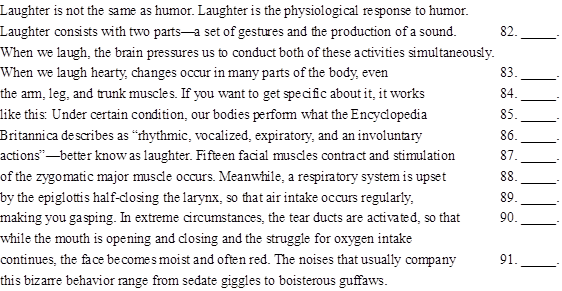
48
_____.
49
_____.
50
_____.
51
_____.
52
_____.
53
_____.
54
55
_____.
56
_____.
57
_____.
七、Part Ⅶ IQ Test
10 marks
58
Rearrange the muddled letters in capitals to make a proper word.The answer will complete the sentence sensibly.

59
The alphabet has been written out to help you.
ABCDEFGHIJKLMNOPQRSTUVWXYZ
Put the letters in the word SPECIAL in alphabetical order.
ABCDEFGHIJKLMNOPQRSTUVWXYZ
Put the letters in the word SPECIAL in alphabetical order.
60
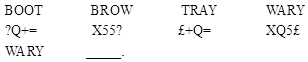
Here are some symbol codes for four words.Match the right code to the word WARY.
61
Change the first word into the last word, by changing one letter at a time and making a new, different word in the middle.
PALM CALF
PALM CALF
62
Fill in the crosswords so that all the given words are included.You have been given one letter as a clue in the crossword.
SHARD STIFF FIXED SNOWS INDIA

SHARD STIFF FIXED SNOWS INDIA
八、Part Ⅷ Writing
30 marks
63
Section A (10 marks)
Start your essay with a brief description of the picture and then comment on How to Prepare for a Race.Write atleast100words on the answersheet.
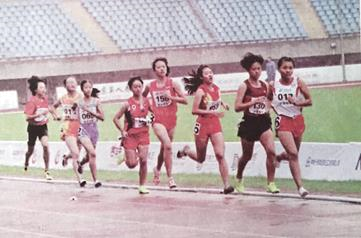
Start your essay with a brief description of the picture and then comment on How to Prepare for a Race.Write atleast100words on the answersheet.
64
Section B (20 marks)
Write on the following topic.
The National Bureau of Statistics has recently released the latest data on property prices in 70 big and medium-sized cities.The prices of new houses in 11 key cities, including Beijing, Shanghai, and Shenzhen, have all fallen slightly since last year.That is to say, housing prices have hopefully been tamed.
Read the above sentences.How do you understand this phenomenon? Write an essay of no less than 160 words on the answer sheet to express your personal views on the issue.
Write on the following topic.
The National Bureau of Statistics has recently released the latest data on property prices in 70 big and medium-sized cities.The prices of new houses in 11 key cities, including Beijing, Shanghai, and Shenzhen, have all fallen slightly since last year.That is to say, housing prices have hopefully been tamed.
Read the above sentences.How do you understand this phenomenon? Write an essay of no less than 160 words on the answer sheet to express your personal views on the issue.
输入阅读码
查看答案与解析需要输入阅读码