2020年全国英语竞赛《A类研究生》初赛试题及答案
A类研究生
历年真题
共 59 题
2341 次浏览
更新于 2026-09-26
二、Part Ⅱ Vocabulary
15 marks
1
There are 15 incomplete sentences in this part.For each blank there are four choices marked A, B, C, and D.Choose the one that best completes the sentence.Then mark the corresponding letter on the answer sheet with a single line through the centre.
Many of the people and places in the book have been _____ in the names of streets.
Many of the people and places in the book have been _____ in the names of streets.
- A.anticipated
- B.commemorated
- C.commercialized
- D.appealed
2
Although architecture has artistic qualities, it must also satisfy a number of important practical _____.
- A.considerations
- B.obligations
- C.observations
- D.regulations
3
The destruction of these treasures was a loss for mankind that no amount of money could _____.
- A.stand up to
- B.put up with
- C.make up for
- D.come up with
4
—I still haven’t made a decision _____ the new engineering project.
—It’s really a hard choice.
—It’s really a hard choice.
- A.in contrast to
- B.in view of
- C.on account of
- D.with regard to
5
We are going to have a get-together before we _____ for the summer vacation.
- A.break down
- B.break out
- C.break through
- D.break up
6
Etymologically considered, the word journeyman means one who is employed _____.
- A.by the day
- B.by day
- C.by a day
- D.by days
7
Although they suffered a serious drought, the harvest was not _____ they got the year before.
- A.more than
- B.more or less
- C.less than
- D.all the more
8
There’s one thing I dislike about him: he will never _____ having made the mistake.
- A.identify
- B.reconcile
- C.confront
- D.admit
9
The atmosphere is as much a part of our earth as _____ its soil and water of its lakes, rivers, seas and oceans.
- A.does
- B.be
- C.are
- D.has
10
“We must keep a secret of the things _____ here,” the general said, _____ at the man in charge of the information office.
- A.discussed; stared seriously
- B.being discussed; seriously staring
- C.to be discussed; seriously stared
- D.discussed; to stare seriously
11
_____ she couldn’t understand was _____ fewer and fewer students showed interest in her lessons.
- A.What; why
- B.That; what
- C.What; because
- D.Why; that
12
I felt somewhat disappointed and was about to leave _____ something occurred which attracted my attention.
- A.unless
- B.until
- C.when
- D.while
13
—Excuse me, I need to get a scarf for my mum.
—Try Ladies’ Wear, sir.It’s one floor up.
—OK, and the scarves are ...?
—Er ..._____, just walk straight ahead and you’ll see the scarves on the right.Oh, by the way, we’ve got some very nice gloves just in.Your mother might like those too.
—I’ll go to get the scarf first.Thanks.
—Try Ladies’ Wear, sir.It’s one floor up.
—OK, and the scarves are ...?
—Er ..._____, just walk straight ahead and you’ll see the scarves on the right.Oh, by the way, we’ve got some very nice gloves just in.Your mother might like those too.
—I’ll go to get the scarf first.Thanks.
- A.before you reach the Ladies’ Wear Section
- B.when you get off the escalator at the fourth floor
- C.while you take the escalator on the left
- D.until you call your mum to ask for her opinion
14
—Country Plumbing and Heating.
—Hello.Could you tell me if you fix kitchen sinks?
—Yes.What’s the problem?
—_____.
—Well, we can send one of our plumbers at 4:00 this afternoon.Will someone be home then?
—I’ll be there then.And my address is ...
—Hello.Could you tell me if you fix kitchen sinks?
—Yes.What’s the problem?
—_____.
—Well, we can send one of our plumbers at 4:00 this afternoon.Will someone be home then?
—I’ll be there then.And my address is ...
- A.Water is leaking all over my kitchen floor.
- B.I can’t open my kitchen door.
- C.There is a hole in my kitchen roof.
- D.I’m feeling sick in the kitchen.
15
—I see that Vincent is smiling again.
—Yes.He didn’t go directly to his boss._____
—That was certainly an unusual way of handling the situation, but it did bring good results.
—Yes.He didn’t go directly to his boss._____
—That was certainly an unusual way of handling the situation, but it did bring good results.
- A.He decided to keep the problem to himself.
- B.He told his boss’s mother about the problem instead.
- C.He asked his mother to help him solve the problem.
- D.He solved the problem entirely on his own.
三、Part Ⅲ Cloze
10 marks
Read the following passage and fill in each blank with one word.Choose the correct word in one of the following three ways: according to the context, by using the correct form of the given word, or by using the given letter(s) of the word.Remember to write the answers on the answer sheet.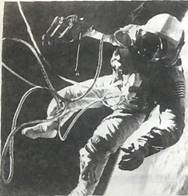 One afternoon in the summer of 1989, a 27-year-old food technologist called Helen Sharman happened to be listening to the radio.She heard an unusual position being advertised: “Astronaut wanted—no (46) pre_____ experience necessary”.She wrote down the phone number and the next day sent off her application.
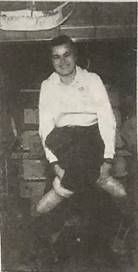 Sharman was one of 13,000 hopefuls who applied to become the first British astronaut when the British agreed to co-operate with the Russians on the Juno space mission. Applicants for the project had to take tough psychological and physical tests. They needed to be scientifically trained, had to speak a foreign language and had to be able to deal with difficult situations, without panicking. Helen Sharman turned out to be (47) id_____. She was a highly-trained scientist, could speak several languages and was well known for her ability to stay cool under pressure. Obviously, physical fitness was also important, and, although Sharman often played squash and regularly went cycling and swimming, she now admits that she was no great athlete when she applied. A strong digestive system was also vital. In space there’s almost no gravity, so the movement of food through the stomach is dependent on muscle power.
To Sharman’s surprise, her application was successful, and six months later she was in Russia, (48) _____ (begin) eighteen months of training. One of the most interesting parts of her preparation was a set of tests which simulated weightlessness. “Actually, it’s extremely difficult to do this on Earth,” explains Sharman, “because to weigh absolutely nothing you have to be positioned between two planets so that the force of their gravity is pulling you in opposite (49)_____ (direct).” The nearest it is possible to get to these conditions on Earth is in a plane that is flying in enormous loops. “We used huge aircraft. When the plane gets to the top and starts to fall, you fall with it, so you feel as if you’re weightless. Each experiment only lasted about 23 (50)_____—not very long—otherwise it would hit the ground.” Once in space, Sharman got used to weightlessness, despite a little initial discomfort.
Another important part of Sharman’s preparation included learning about the technical aspects of space travel. There were only three people in the spacecraft, and they all needed to be able to operate it. The Russians wanted to make (51)_____ Helen could operate all the systems she would need to survive on her own in an emergency.
On 18 May, 1991, Sharman boarded the Soyuz spacecraft with two Russian cosmonauts. Once it was in space, the craft travelled (52)_____ a speed of 29,000 km/h. It docked with the Mir Space Station two days later. She says living up there was not as (53)_____ (frighten) as it sounds.
“Eating wasn’t too difficult. We sucked coffee and tea out of tubes and ate tinned food.”
In space Sharman carried out experiments on various materials to be used for new drugs and electronics. The results were brought back to Earth for (54) ana_____.
Although she would like to go back into space, these days Sharman is happy working as a part-time consultant to a company making satellites. The rest of her time she spends trying to persuade schoolchildren to take up a (55) car_____ in science and technology.
One afternoon in the summer of 1989, a 27-year-old food technologist called Helen Sharman happened to be listening to the radio.She heard an unusual position being advertised: “Astronaut wanted—no (46) pre_____ experience necessary”.She wrote down the phone number and the next day sent off her application. Sharman was one of 13,000 hopefuls who applied to become the first British astronaut when the British agreed to co-operate with the Russians on the Juno space mission. Applicants for the project had to take tough psychological and physical tests. They needed to be scientifically trained, had to speak a foreign language and had to be able to deal with difficult situations, without panicking. Helen Sharman turned out to be (47) id_____. She was a highly-trained scientist, could speak several languages and was well known for her ability to stay cool under pressure. Obviously, physical fitness was also important, and, although Sharman often played squash and regularly went cycling and swimming, she now admits that she was no great athlete when she applied. A strong digestive system was also vital. In space there’s almost no gravity, so the movement of food through the stomach is dependent on muscle power.To Sharman’s surprise, her application was successful, and six months later she was in Russia, (48) _____ (begin) eighteen months of training. One of the most interesting parts of her preparation was a set of tests which simulated weightlessness. “Actually, it’s extremely difficult to do this on Earth,” explains Sharman, “because to weigh absolutely nothing you have to be positioned between two planets so that the force of their gravity is pulling you in opposite (49)_____ (direct).” The nearest it is possible to get to these conditions on Earth is in a plane that is flying in enormous loops. “We used huge aircraft. When the plane gets to the top and starts to fall, you fall with it, so you feel as if you’re weightless. Each experiment only lasted about 23 (50)_____—not very long—otherwise it would hit the ground.” Once in space, Sharman got used to weightlessness, despite a little initial discomfort.
Another important part of Sharman’s preparation included learning about the technical aspects of space travel. There were only three people in the spacecraft, and they all needed to be able to operate it. The Russians wanted to make (51)_____ Helen could operate all the systems she would need to survive on her own in an emergency.
On 18 May, 1991, Sharman boarded the Soyuz spacecraft with two Russian cosmonauts. Once it was in space, the craft travelled (52)_____ a speed of 29,000 km/h. It docked with the Mir Space Station two days later. She says living up there was not as (53)_____ (frighten) as it sounds.
“Eating wasn’t too difficult. We sucked coffee and tea out of tubes and ate tinned food.”
In space Sharman carried out experiments on various materials to be used for new drugs and electronics. The results were brought back to Earth for (54) ana_____.
Although she would like to go back into space, these days Sharman is happy working as a part-time consultant to a company making satellites. The rest of her time she spends trying to persuade schoolchildren to take up a (55) car_____ in science and technology.
16
_____
17
_____
18
_____
19
_____
20
_____
21
_____
22
_____
23
_____
24
_____
25
_____
四、Part Ⅳ RC
30 marks(Reading Comprehension)
Section A (10 marks)
Questions 56 to 60 are based on the following passage.
Good evening, everyone.As many of you know I often travel for my job as a rug buyer and this evening I’ve been asked to give a talk about travelling in Europe and Asia.I’ll try to pass on some useful advice for those of you who are planning to travel there yourselves.At the end of my talk, I’ll be happy to answer questions.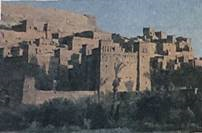 My first piece of advice is to work hard on your research before you go if you want to make your trip enjoyable and rewarding.I plan my trips very carefully for at least three months before I leave, reading about the places I am going to visit on the Internet and in books.
I had a very memorable trip recently, starting out in Morocco.Morocco is a country located in North Africa.It has a coast on the Atlantic Ocean that reaches past the Strait of Gibraltar into the Mediterranean Sea.It is bordered by Spain, Algeria, and Western Sahara.Much of Morocco is mountainous.The Atlas Mountain and Rif Mountains are located on the northern coast and interior.The city of Marrakech is an absolutely amazing place to visit and well worth adding to your itinerary.Try to stay near the old part of the city.There are so many historical buildings and so much to see.The mosques in particular are very beautiful.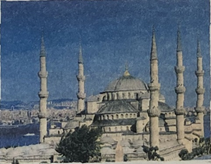 After leaving Morocco I took a long tiring boat ride to Turkey. Turkey is a transcontinental country located in Southeastern Europe and Southwestern Asia bordering the Black Sea. It has a strategic location controlling the Turkish Straits that link the Black and Aegean Seas. The geography of Turkey consists of narrow coastal plains in the west that become increasingly rugged as they progress eastward. It was well worth the trio, especially if you like local crafts. I bought a beautiful Turkish carpet in one of the villages while I was there. The man that sold it to me spoke very good English and he told me all about the different styles of carpet. I was fascinated to see the extraordinary range of patterns.
I left the small mountain villages of Turkey to travel to the huge, crowded cities of India. India is the largest country in South Asia. The word “Indian” comes from Sindhu, a local name for the Indus River. Indians also call their country “Bharat”, the name of a legendary emperor. Indian history dates to the third millennium BC when Harappan civilization flourished in the Indus Valley. Aryan-speaking tribes from Central Asia began settling in northwestern India around 1700 BC. These groups eventually took over much of India.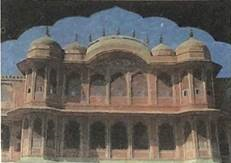 India is a fascinating country, and I have always enjoyed my visits there. Everywhere you go the people are very welcoming and friendly towards visitors. They always seem pleased to see you. It’s easy to see why India is such a popular destination for travellers.
One of the highlights for me on this visit was the Gujarati Textile Museum. It was the first time I had been there. If you are interested in textiles, this museum is really impressive, with lots of information and some absolutely stunning examples of Indian silk embroidery, and other fabrics.
If you’re interested in seeing wildlife I recommend travelling in the more remote areas of the country. I was amazed at the variety of wonderful animals which I saw on my trip and the most incredible colourful birds with vivid blue and green feathers. I also saw several poisonous spiders, although I have to say that I found the insects rather frightening!
Questions 56 to 60
Complete the table below, using two words for each blank according to the information above.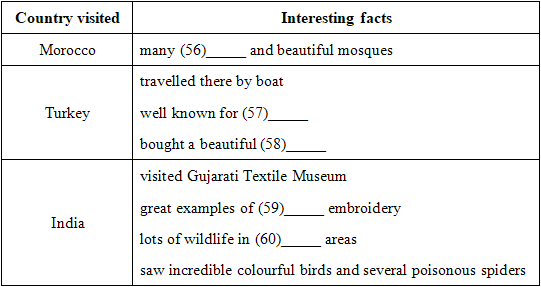
Questions 56 to 60 are based on the following passage.
Good evening, everyone.As many of you know I often travel for my job as a rug buyer and this evening I’ve been asked to give a talk about travelling in Europe and Asia.I’ll try to pass on some useful advice for those of you who are planning to travel there yourselves.At the end of my talk, I’ll be happy to answer questions.
My first piece of advice is to work hard on your research before you go if you want to make your trip enjoyable and rewarding.I plan my trips very carefully for at least three months before I leave, reading about the places I am going to visit on the Internet and in books.I had a very memorable trip recently, starting out in Morocco.Morocco is a country located in North Africa.It has a coast on the Atlantic Ocean that reaches past the Strait of Gibraltar into the Mediterranean Sea.It is bordered by Spain, Algeria, and Western Sahara.Much of Morocco is mountainous.The Atlas Mountain and Rif Mountains are located on the northern coast and interior.The city of Marrakech is an absolutely amazing place to visit and well worth adding to your itinerary.Try to stay near the old part of the city.There are so many historical buildings and so much to see.The mosques in particular are very beautiful.
After leaving Morocco I took a long tiring boat ride to Turkey. Turkey is a transcontinental country located in Southeastern Europe and Southwestern Asia bordering the Black Sea. It has a strategic location controlling the Turkish Straits that link the Black and Aegean Seas. The geography of Turkey consists of narrow coastal plains in the west that become increasingly rugged as they progress eastward. It was well worth the trio, especially if you like local crafts. I bought a beautiful Turkish carpet in one of the villages while I was there. The man that sold it to me spoke very good English and he told me all about the different styles of carpet. I was fascinated to see the extraordinary range of patterns.I left the small mountain villages of Turkey to travel to the huge, crowded cities of India. India is the largest country in South Asia. The word “Indian” comes from Sindhu, a local name for the Indus River. Indians also call their country “Bharat”, the name of a legendary emperor. Indian history dates to the third millennium BC when Harappan civilization flourished in the Indus Valley. Aryan-speaking tribes from Central Asia began settling in northwestern India around 1700 BC. These groups eventually took over much of India.
India is a fascinating country, and I have always enjoyed my visits there. Everywhere you go the people are very welcoming and friendly towards visitors. They always seem pleased to see you. It’s easy to see why India is such a popular destination for travellers.One of the highlights for me on this visit was the Gujarati Textile Museum. It was the first time I had been there. If you are interested in textiles, this museum is really impressive, with lots of information and some absolutely stunning examples of Indian silk embroidery, and other fabrics.
If you’re interested in seeing wildlife I recommend travelling in the more remote areas of the country. I was amazed at the variety of wonderful animals which I saw on my trip and the most incredible colourful birds with vivid blue and green feathers. I also saw several poisonous spiders, although I have to say that I found the insects rather frightening!
Questions 56 to 60
Complete the table below, using two words for each blank according to the information above.
26
_____
27
_____
28
_____
29
_____
30
_____
Section B (10 marks)
Questions 61 to 65 are based on the following passage.
You are going to read a magazine article written by a wildlife photographer, Jenny Laverne.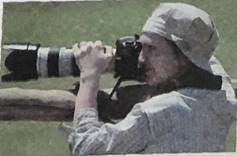 I suppose you could say I’ve been passionate about wildlife since I was a child. One of my earliest memories is of getting keen on fishing in a stream near our house, and while I was standing there waiting for the fish to bite, I’d start noticing all the wildlife. I’d rush home and tell my parents all about the animals and birds I’d seen. Later on I learnt a lot from my uncle, who’s very knowledgeable about birds, and I watched every wildlife series there was on TV. Then I bought my first camera, and a photographer was born!
I’m completely self-taught, as I don’t believe you can learn a skill by sitting in a classroom. That said, friends and colleagues say you get a lot out of attending courses—it just isn’t my experience, so I wouldn’t recommend it. Of course once you’ve learnt the basics, it might be fun to be a member of a photographic club, so you can work on projects together.
I’m busy all the time now that I’m better known, and I work spring, summer, autumn, winter, with hardly a break sometimes—not something I need or want to do, but I’ve got into the routine of it. I have to get the most out of each day, so I often find myself making notes for articles, say, or editing images, maybe, while waiting in a hide for a bird to appear. I try to be patient, but luckily there’s usually nobody to hear if I get across and start muttering to myself!
The south-west is my home and that’s where I take most of my photos. It’s not that I mind driving or even flying further afield, I just feel there’s such a diversity of subjects here, from red deer to field voles, so I’m lucky to have them on my doorstep. I always ask my friends to tell me when they happen to spot an interesting or unusual animal if they’re out walking, but they don’t often remember! But I do sometimes get tip-offs from members of the public or wildlife organisations operating locally.
I’ve been working as a wildlife photographer for ten years now and have a pretty strong reputation, though I say so myself. I use the most sophisticated cameras and lenses I can get hold of, but that doesn’t make me different from any other professional photographer. And I put in a lot of hours, but again, that’s something we all have to do. I think what I’m known for is being able to come up with exceptional images in adverse conditions. And wildlife is a popular area at the moment. Of course, it’s not my only area of expertise. I dabble in (涉足) country sports, conservation projects and landscape shots as well.
I’m proud to say that almost all the subjects in my images are taken in the wild—under no circumstances are the animals out under any stress or their habitats disturbed, and where necessary I obtain the appropriate licence. I’ve very occasionally photographed captive subjects, but only if a particular commission—a request from an owner, perhaps—requires this, or if I’ve been asked to do so by the Secret World Animal Rescue Centre, which I’m happy to work with.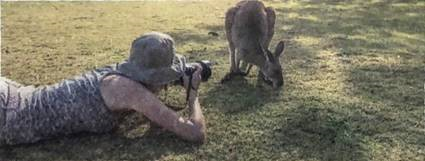 My range of clients varies from someone just wanting a picture to hang in their sitting room, to picture libraries and major wildlife charities.I’ve been fortunate enough to win a couple of international competitions.A while ago I spent ages checking the proofs of a book of what I think are my most beautiful photos—it’s out in the shops now, in fact.Something I haven’t done, which would be fun, is to travel round the country showing a selection of my images at local art galleries and libraries.I like the idea of making contact with the public.But who knows what else will occur to me?
Questions 61 to 65
Answer the following questions with the information given in the passage.
Questions 61 to 65 are based on the following passage.
You are going to read a magazine article written by a wildlife photographer, Jenny Laverne.
I suppose you could say I’ve been passionate about wildlife since I was a child. One of my earliest memories is of getting keen on fishing in a stream near our house, and while I was standing there waiting for the fish to bite, I’d start noticing all the wildlife. I’d rush home and tell my parents all about the animals and birds I’d seen. Later on I learnt a lot from my uncle, who’s very knowledgeable about birds, and I watched every wildlife series there was on TV. Then I bought my first camera, and a photographer was born!I’m completely self-taught, as I don’t believe you can learn a skill by sitting in a classroom. That said, friends and colleagues say you get a lot out of attending courses—it just isn’t my experience, so I wouldn’t recommend it. Of course once you’ve learnt the basics, it might be fun to be a member of a photographic club, so you can work on projects together.
I’m busy all the time now that I’m better known, and I work spring, summer, autumn, winter, with hardly a break sometimes—not something I need or want to do, but I’ve got into the routine of it. I have to get the most out of each day, so I often find myself making notes for articles, say, or editing images, maybe, while waiting in a hide for a bird to appear. I try to be patient, but luckily there’s usually nobody to hear if I get across and start muttering to myself!
The south-west is my home and that’s where I take most of my photos. It’s not that I mind driving or even flying further afield, I just feel there’s such a diversity of subjects here, from red deer to field voles, so I’m lucky to have them on my doorstep. I always ask my friends to tell me when they happen to spot an interesting or unusual animal if they’re out walking, but they don’t often remember! But I do sometimes get tip-offs from members of the public or wildlife organisations operating locally.
I’ve been working as a wildlife photographer for ten years now and have a pretty strong reputation, though I say so myself. I use the most sophisticated cameras and lenses I can get hold of, but that doesn’t make me different from any other professional photographer. And I put in a lot of hours, but again, that’s something we all have to do. I think what I’m known for is being able to come up with exceptional images in adverse conditions. And wildlife is a popular area at the moment. Of course, it’s not my only area of expertise. I dabble in (涉足) country sports, conservation projects and landscape shots as well.
I’m proud to say that almost all the subjects in my images are taken in the wild—under no circumstances are the animals out under any stress or their habitats disturbed, and where necessary I obtain the appropriate licence. I’ve very occasionally photographed captive subjects, but only if a particular commission—a request from an owner, perhaps—requires this, or if I’ve been asked to do so by the Secret World Animal Rescue Centre, which I’m happy to work with.
My range of clients varies from someone just wanting a picture to hang in their sitting room, to picture libraries and major wildlife charities.I’ve been fortunate enough to win a couple of international competitions.A while ago I spent ages checking the proofs of a book of what I think are my most beautiful photos—it’s out in the shops now, in fact.Something I haven’t done, which would be fun, is to travel round the country showing a selection of my images at local art galleries and libraries.I like the idea of making contact with the public.But who knows what else will occur to me?Questions 61 to 65
Answer the following questions with the information given in the passage.
31
What attracted Jenny’s attention while she was fishing as a child?
32
How did Jenny learn photography?
33
What does Jenny say makes her different from other professional photographers?
34
What does Jenny strictly avoid photographing?
35
What is Jenny hoping to do in the future?
Section C (10 marks)
Questions 66 to 70 are based on the following passage. In English, the word about colour can reflect different emotions.Blue and grey mean bad mood and red means vitality.You might think that whether you choose a blue shirt or a yellow one to wear to work or college makes no difference to your day and those around you.However, an increasing number of experts argue that the colours we choose affect our mood, our career prospects and even our health.
The power of colour has been used for centuries and we should be making the most of it in our lives today.Colour affects us to a greater degree than most of us realise.It is used increasingly by psychologists and therapists for influencing mood and state of mind, and for various types of treatments when we are ill.Some people even believe that the blind can benefit from the “vibrations” that colour gives off. A new research found that people are easily affected by the products that are in colours.For example, when students see the red colour on the blackboard, they don’t feel eased.The candies which are packaged in green don’t often sell well and the food aren’t packaged in blue.Colour has something to do with people’s mood, so the wise manufacturers make use of this rule to catch people’s attention.They choose the colour that pleases customers and make more profits.Companies use colour to great effect to encourage us to buy their products.For example, purple is seen as creative and mixes well with red, to show that a company has ideas and the power to make them happen.Orange and blue are also recommended colours for companies to use, because orange is the colour of communication and blue suggests safety and security.So this could be a particularly good combination.Companies have found that certain colours “speak” to specific age groups.They often use red to attract younger people to their products, for example, as it is vibrant and more youthful than colours like gold and navy, which older customers seem to prefer.
Wearing different colours can affect how you feel and how others react to you, so it is important to consider this when deciding what to wear in the morning.If you want people to take you seriously, then wearing navy blue or black is good.Blue would also be helpful for an interview or oral examination because it relaxes you and makes you feel calm.Red gets you noticed by everyone and makes you, the wearer, feel energetic, but be careful, as it can raise your pulse rate and not everyone wants this effect.
Turquoise (青绿色) is a “user-friendly”, approachable colour, which people are attracted to; they feel friendly towards you when you wear it.It is also thought that turquoise can treat stress and headaches.Green is a good colour if you are not feeling well, and possibly this is why we sometimes give flowers and plants to friends and relatives in hospital.
So think carefully before you leave the house or visit a friend with a gift.The colours you choose in both cases are a powerful tool.Are you making the right impression—on yourself and on others.
Questions 66 to 70
Complete the summary below with information from the passage, using no more than three words for each blank.
It is thought that colour affects our (66)_____, our career and how we feel.Some people believe that it can even help cure illnesses.Companies use colour to appeal to different kinds of customers and to make us (67)_____.Wearing certain colours can affect our performance in interviews or (68)_____, and it can affect how others behave towards us.Turquoise can treat (69)_____.We sometimes give (70)_____ to friends and relatives in hospital, as the colour can have a positive on whoever receives the gift.
Questions 66 to 70 are based on the following passage.
In English, the word about colour can reflect different emotions.Blue and grey mean bad mood and red means vitality.You might think that whether you choose a blue shirt or a yellow one to wear to work or college makes no difference to your day and those around you.However, an increasing number of experts argue that the colours we choose affect our mood, our career prospects and even our health.The power of colour has been used for centuries and we should be making the most of it in our lives today.Colour affects us to a greater degree than most of us realise.It is used increasingly by psychologists and therapists for influencing mood and state of mind, and for various types of treatments when we are ill.Some people even believe that the blind can benefit from the “vibrations” that colour gives off.
A new research found that people are easily affected by the products that are in colours.For example, when students see the red colour on the blackboard, they don’t feel eased.The candies which are packaged in green don’t often sell well and the food aren’t packaged in blue.Colour has something to do with people’s mood, so the wise manufacturers make use of this rule to catch people’s attention.They choose the colour that pleases customers and make more profits.Companies use colour to great effect to encourage us to buy their products.For example, purple is seen as creative and mixes well with red, to show that a company has ideas and the power to make them happen.Orange and blue are also recommended colours for companies to use, because orange is the colour of communication and blue suggests safety and security.So this could be a particularly good combination.Companies have found that certain colours “speak” to specific age groups.They often use red to attract younger people to their products, for example, as it is vibrant and more youthful than colours like gold and navy, which older customers seem to prefer.Wearing different colours can affect how you feel and how others react to you, so it is important to consider this when deciding what to wear in the morning.If you want people to take you seriously, then wearing navy blue or black is good.Blue would also be helpful for an interview or oral examination because it relaxes you and makes you feel calm.Red gets you noticed by everyone and makes you, the wearer, feel energetic, but be careful, as it can raise your pulse rate and not everyone wants this effect.
Turquoise (青绿色) is a “user-friendly”, approachable colour, which people are attracted to; they feel friendly towards you when you wear it.It is also thought that turquoise can treat stress and headaches.Green is a good colour if you are not feeling well, and possibly this is why we sometimes give flowers and plants to friends and relatives in hospital.
So think carefully before you leave the house or visit a friend with a gift.The colours you choose in both cases are a powerful tool.Are you making the right impression—on yourself and on others.
Questions 66 to 70
Complete the summary below with information from the passage, using no more than three words for each blank.
It is thought that colour affects our (66)_____, our career and how we feel.Some people believe that it can even help cure illnesses.Companies use colour to appeal to different kinds of customers and to make us (67)_____.Wearing certain colours can affect our performance in interviews or (68)_____, and it can affect how others behave towards us.Turquoise can treat (69)_____.We sometimes give (70)_____ to friends and relatives in hospital, as the colour can have a positive on whoever receives the gift.
36
_____
37
_____
38
_____
39
_____
40
_____
五、Part Ⅴ Translation
15 marks
41
Section A (5 marks)
Translate the following paragraph into Chinese.Remember to write the answers on the answer sheet.
Young people are watching less and less news on television.A research suggests that young people are increasingly using social media as their primary news source.There is evidence that young people are consuming news more actively via social media.It suggests presenting news stories in a less complicated, more accessible way to attract young people’s attention.Some people suggested this would be “dumbing down (使……容易理解) content for young audiences”.
Translate the following paragraph into Chinese.Remember to write the answers on the answer sheet.
Young people are watching less and less news on television.A research suggests that young people are increasingly using social media as their primary news source.There is evidence that young people are consuming news more actively via social media.It suggests presenting news stories in a less complicated, more accessible way to attract young people’s attention.Some people suggested this would be “dumbing down (使……容易理解) content for young audiences”.
42
Section B (10 marks)
Translate the following sentences into English by using the hints given in brackets.Remember to write the answers on the answer sheet.
在社交媒体上晒照之前,或许我们都会用一款应用来一键磨皮,放大双眼,加长睫毛以及丰满唇行。(72)只需在手机上轻点几下,我们便能轻松地向全世界展现“最好”的自己。(tap)然而,这么做的问题在于,简单地修图去掉自身瑕疵的同时,我们也改变了看待自己的方式。(73)一些研究人员分析了美图应用给人们的自尊所带来的不良影响,以及其让人产生外貌焦虑的潜在可能。(photo editing apps; self-esteem)研究人员也发出警告称,这类应用模糊了现实与虚幻的界限。(74)这些应用几分钟就能改变一个人的外表,追求的是一种不切实际的审美。(an unrealistic standard of beauty)在过去,人们或许会将自己的相貌与名人进行比较。但对如今的年轻人而言,审美标准大多数来自在社交媒体上看到的形象。(75)这便是许多年轻人在外貌上产生身份认同危机的原因。(suffer an identity crisis)当人们花费过多时间进行此类比较时,他们或许便患上“美容病”,甚至很难接受自己真实的外貌。因为立在你与世界之间的是一面镜子,它如影随形,无处不在,你根本无法放下它。(76)所以当我们在照一面真实的镜子时,我们不能问自己:“我看起来和美颜照片里的我一样漂亮吗?”(in the filtered photos)相反地,我们应该这么想:“我觉得很好,我有一种健康美。”
Translate the following sentences into English by using the hints given in brackets.Remember to write the answers on the answer sheet.
在社交媒体上晒照之前,或许我们都会用一款应用来一键磨皮,放大双眼,加长睫毛以及丰满唇行。(72)只需在手机上轻点几下,我们便能轻松地向全世界展现“最好”的自己。(tap)然而,这么做的问题在于,简单地修图去掉自身瑕疵的同时,我们也改变了看待自己的方式。(73)一些研究人员分析了美图应用给人们的自尊所带来的不良影响,以及其让人产生外貌焦虑的潜在可能。(photo editing apps; self-esteem)研究人员也发出警告称,这类应用模糊了现实与虚幻的界限。(74)这些应用几分钟就能改变一个人的外表,追求的是一种不切实际的审美。(an unrealistic standard of beauty)在过去,人们或许会将自己的相貌与名人进行比较。但对如今的年轻人而言,审美标准大多数来自在社交媒体上看到的形象。(75)这便是许多年轻人在外貌上产生身份认同危机的原因。(suffer an identity crisis)当人们花费过多时间进行此类比较时,他们或许便患上“美容病”,甚至很难接受自己真实的外貌。因为立在你与世界之间的是一面镜子,它如影随形,无处不在,你根本无法放下它。(76)所以当我们在照一面真实的镜子时,我们不能问自己:“我看起来和美颜照片里的我一样漂亮吗?”(in the filtered photos)相反地,我们应该这么想:“我觉得很好,我有一种健康美。”
六、Part Ⅵ EC
10 marks(Error Correction)
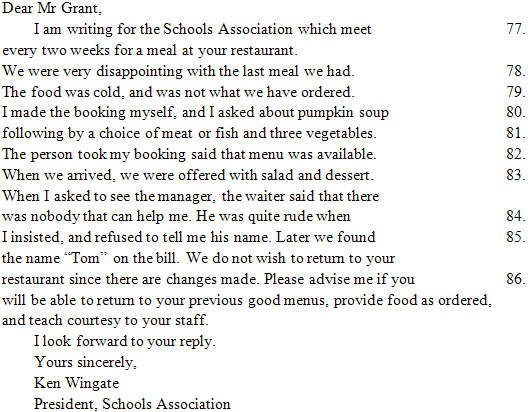
Proofread the passage as required.Each indicated line contains a maximum of one error.Correct the passage in the following ways: for a right line, put the sign “√” in the corresponding blank; for a wrong word, underline the wrong word and write the correct one in the blank; for a missing word, mark the position of the missing word with the sign “∧” and write the word you believe to be missing in the blank; for an unnecessary word, cross the unnecessary word with the sign “\” and put the word with the sign in the blank.Write the answers on the answer sheet.
43
_____
44
_____
45
_____
46
_____
47
_____
48
_____
49
_____
50
_____
51
_____
52
_____
七、Part Ⅶ IQ Test
10 marks
53
There are five IQ Test question in this part.Write the answers on the answer sheet.
At Kew Gardens, the giant Victoria lily grows in a small pond.Suppose it doubles its size each day and it covers the whole pond—as it does—after 30 days.After how many days does it cover haft the pond?
At Kew Gardens, the giant Victoria lily grows in a small pond.Suppose it doubles its size each day and it covers the whole pond—as it does—after 30 days.After how many days does it cover haft the pond?
54
Add one letter, not necessarily the same letter, to each word at the front, end or middle, to find two words that are similar in meaning.
PAST; SICK
PAST; SICK
55
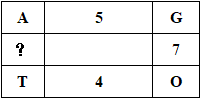
The numbers and letters in this square are linked.Find the correct number to replace the question mark.
56
What number should replace the question mark?
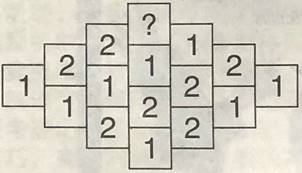
57
Which is the odd one out?
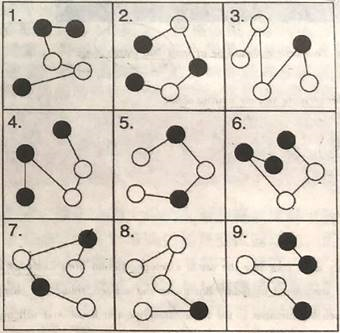
八、Part Ⅷ Writing
30 marks
58
Section A (10 marks)
You have seen this competition in a magazine and decide to write an entry.
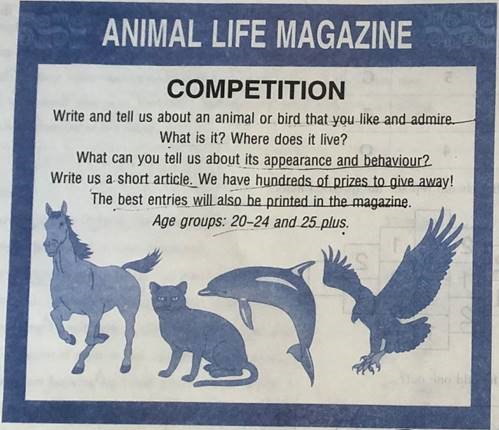 W
W
rite your entry for the competition.Your article should be at least 100 words long.
Don’t forget to also include:
●why you have chosen the particular creature you are writing about
●what, for you, is special about it
●what can be done to take care of it.
Write your article on the answer sheet.
You have seen this competition in a magazine and decide to write an entry.
Write your entry for the competition.Your article should be at least 100 words long.
Don’t forget to also include:
●why you have chosen the particular creature you are writing about
●what, for you, is special about it
●what can be done to take care of it.
Write your article on the answer sheet.
59
Section B (20 marks)
The future is coming, but it probably won’t look like the set of a science fiction film.Everyday items will look pretty much like those we see around us today.But under the surface, things are changing.One place where we are likely to see big changes is the home.Describe the house you will own in twenty years’ time and compare it with the house you live in now.
Write an article of at least 160 words on the answer sheet.
The future is coming, but it probably won’t look like the set of a science fiction film.Everyday items will look pretty much like those we see around us today.But under the surface, things are changing.One place where we are likely to see big changes is the home.Describe the house you will own in twenty years’ time and compare it with the house you live in now.
Write an article of at least 160 words on the answer sheet.
输入阅读码
查看答案与解析需要输入阅读码