2022年全国英语竞赛《A类研究生》决赛试题及答案
A类研究生
历年真题
共 50 题
2366 次浏览
更新于 2026-09-26
二、Part Ⅱ Vocabulary
15 marks
1
There are 15 incomplete sentences in this part. For each blank there are four choices marked A, B, C and D. Choose the one that best completes the sentence. Then mark the corresponding letter on the answer sheet with a single line through the centre.
In education there should be a good _____ among the branches of knowledge that contribute effective thinking and wise judgment.
In education there should be a good _____ among the branches of knowledge that contribute effective thinking and wise judgment.
- A.assignment
- B.balance
- C.combination
- D.disposal
2
The fact that the golden eagle usually builds its nest on some high cliffs _____ it almost impossible to obtain the egg or the young birds.
- A.relates
- B.reckons
- C.regards
- D.renders
3
As time went by, computers became smaller and more powerful and they became “personal” too, as well as_____, with display sharper and storage capacity increasing.
- A.institutional
- B.universal
- C.fundamental
- D.beneficial
4
However, growth in the fabricated metals industry was able to _____ some of the decline in the iron and steel industry.
- A.overcome
- B.overtake
- C.offset
- D.oppress
5
This does not mean that adults must accept irresponsibility. _____, they can help students acquire a sense of commitment by having clearly stated rules.
- A.On the contrary
- B.On the average
- C.On the whole
- D.On the other hand
6
Otherwise, we will have _____ giving to others our independence of thought and action.
- A.conveyed to
- B.consented to
- C.conformed to
- D.confided to
7
More colleges are _____ to let students sit in judgement on classmates _____ bullying to curb Britain’s classroom violence.
- A.concerned; blaming for
- B.crusading; relied on
- C.poised; accused of
- D.opposing; carrying out
8
―Has Lily finished writing her composition?
―No, but it _____ an hour ago.
―No, but it _____ an hour ago.
- A.should finish
- B.should be finished
- C.should have finished
- D.should have been finished
9
Church, mosque and temple as we use the words refer to religious institutions, _____ they Christian, Jewish, Islamic, Buddhist, and so on.
- A.be
- B.being
- C.were
- D.are
10
Conversation becomes weaker in society that spends so much time listening and being talked to _____ it has all but lost the will and the skill to speak for itself.
- A.that
- B.what
- C.which
- D.as
11
So involved with their computers _____ that leaders at summer computer camps often have to force them to break for sports and games.
- A.became the children
- B.become the children
- C.did the children become
- D.have the children become
12
Among isolated peoples, who are not often reached _____ traders _____ outside, commerce usually means barter.
- A.of; from
- B.from; by
- C.by; from
- D.of; by
13
—Hey, Jane, have you finished the report yet? Sarah was asking about it.
—I’m afraid not. I’m about to go to Rome for a conference and I won’t be able to finish the report before I go.
—Oh. _____
—The conference only lasts three day, so I’m not in Rome for long—just the weekend. Then, I’ll be working on the report all next week.
—I’m afraid not. I’m about to go to Rome for a conference and I won’t be able to finish the report before I go.
—Oh. _____
—The conference only lasts three day, so I’m not in Rome for long—just the weekend. Then, I’ll be working on the report all next week.
- A.When do you think it will be ready?
- B.What are you going to talk about?
- C.Where will the conference be held?
- D.How long will you need to finish the report?
14
—OK, so it’s Millie’s turn to give her tutorial today, isn’t it?
—That’s right. I’m going to talk about renewable energy sources, and specifically solar towers. I’m not sure how much you already know about soar tower, so I thought I’d start with a few questions. _____
―Don’t they somehow use the sun’s energy to create electricity?
—That’s right. I’m going to talk about renewable energy sources, and specifically solar towers. I’m not sure how much you already know about soar tower, so I thought I’d start with a few questions. _____
―Don’t they somehow use the sun’s energy to create electricity?
- A.To start with, do you know how old this idea is?
- B.First of all, does anyone know how solar towers work?
- C.If these towers are so tall, how do they cope in high winds?
- D.Everyone seems to know something about the towers, don’t they?
15
—Well, today’s topic for debate is “home schooling”. And the question we’re asking is, “Is it better for us to educate our children at home than send them to school?” What do you think, Tina?
—_____ Personally, I feel the teachers did a really good job and I have benefited from the experience.
—What about you, Nick?
—_____ Personally, I feel the teachers did a really good job and I have benefited from the experience.
—What about you, Nick?
- A.If he’d been educated at home, he’d probably feel quite different.
- B.Well, I went to a normal school and enjoyed playing with schoolmates.
- C.I think being educated at home would be a good choice for children.
- D.Well, I was educated at an ordinary school and I don’t have any regrets.
三、Part Ⅲ Cloze
10 marks
Read the following passage and fill in each blank with one word in one of the following three ways: according to the context, by using the correct form of the given word, or by using the given letter(s) of the word. Write the answers on the answer sheet.
For a scholar focusing on Australia’s public diplomacy, (46)_____ (work) as a recreational manager in China may never be part of his career path. But Bradley McConachie does have lots to say now about his special experience at a resort in the picturesque tropical coastal city of Sanya in South China’s Hainan province.
The 33-year-old Australian is actually a student in international relations completing his PhD through Griffith University. He came to Beijing for a (47)_____ (cooperate) research at Peking University less than two years ago. Such an academic life was just added colour with a chance offered by the cultural exchanges project, “I’m in China”.
Bradley was lucky to win the most “likes” for his photo story about his life in China and became one of 20 winners to visit locations after a global recruitment by the project this summer. All the winners’ experiences were filmed to produce a reality show, My Chinese Working Day, which will be (48) br_____ by mid-September.
“What I liked most about the experience was it was something completely different that you would never be able to do as a regular (49)_____ (tour),” Bradley said in an exclusive interview.
Bradley was chosen to work as a recreational manager for a Chinese wedding.
The film crew took them to many “amazing sites” and the staff at the resort taught them a lot about how to “incorporate modern Chinese traits while still keeping traditional customs”, Bradley said.
“I would have to say two things stick out as the most (50)_____ (memory): the helicopter ride and talking with the staff at the hotel about how they organize weddings here in China,” he said.
That was Bradley’s first time to be in a helicopter, and he was too absorbed with the “stunning” view of the beautiful coastline.
“I think it’s so important to show other Australians the different landscapes China has to offer. I think so many Australians, (51)_____ they think about China, imagine the historical sites of Beijing and the exciting things to see in Shanghai but have no idea about other beautiful places, like Sanya or the many other places people have been taken to in this TV series,” Bradley said.
As to the Chinese wedding, the ceremony was quite familiar to Bradley, which he said was “very much like any wedding he had been to back in Australia”. But it was still “interesting to see how Chinese couples (52) bal_____ the desires of a modern wedding while keeping Chinese traditions”, after decorating the weddings suite.
“It was nice to experience these little touches and understand what makes a wedding day so (53) sp_____ for a Chinese couple. I was happy to be a part of that experience!” Bradley said.
“I’m in China” is a project sponsored by China Intercontinental Communication Centre and other institutions under the guidance of China’s State Council Information Office. It invites foreign natives worldwide to experience unique jobs and participate in activities that one can find nowhere (54)_____ except in China.
Shooting My Chinese Working Day is part of the project. An online contest to select who gets to be the front-line cultural ambassadors, kicked (55)_____ on July 31. More than 10,000 photos and articles were submitted from around the globe by over 6,000 applicants, which has earned tremendous web views, likes and shares.
For a scholar focusing on Australia’s public diplomacy, (46)_____ (work) as a recreational manager in China may never be part of his career path. But Bradley McConachie does have lots to say now about his special experience at a resort in the picturesque tropical coastal city of Sanya in South China’s Hainan province.
The 33-year-old Australian is actually a student in international relations completing his PhD through Griffith University. He came to Beijing for a (47)_____ (cooperate) research at Peking University less than two years ago. Such an academic life was just added colour with a chance offered by the cultural exchanges project, “I’m in China”.
Bradley was lucky to win the most “likes” for his photo story about his life in China and became one of 20 winners to visit locations after a global recruitment by the project this summer. All the winners’ experiences were filmed to produce a reality show, My Chinese Working Day, which will be (48) br_____ by mid-September.
“What I liked most about the experience was it was something completely different that you would never be able to do as a regular (49)_____ (tour),” Bradley said in an exclusive interview.
Bradley was chosen to work as a recreational manager for a Chinese wedding.
The film crew took them to many “amazing sites” and the staff at the resort taught them a lot about how to “incorporate modern Chinese traits while still keeping traditional customs”, Bradley said.
“I would have to say two things stick out as the most (50)_____ (memory): the helicopter ride and talking with the staff at the hotel about how they organize weddings here in China,” he said.
That was Bradley’s first time to be in a helicopter, and he was too absorbed with the “stunning” view of the beautiful coastline.
“I think it’s so important to show other Australians the different landscapes China has to offer. I think so many Australians, (51)_____ they think about China, imagine the historical sites of Beijing and the exciting things to see in Shanghai but have no idea about other beautiful places, like Sanya or the many other places people have been taken to in this TV series,” Bradley said.
As to the Chinese wedding, the ceremony was quite familiar to Bradley, which he said was “very much like any wedding he had been to back in Australia”. But it was still “interesting to see how Chinese couples (52) bal_____ the desires of a modern wedding while keeping Chinese traditions”, after decorating the weddings suite.
“It was nice to experience these little touches and understand what makes a wedding day so (53) sp_____ for a Chinese couple. I was happy to be a part of that experience!” Bradley said.
“I’m in China” is a project sponsored by China Intercontinental Communication Centre and other institutions under the guidance of China’s State Council Information Office. It invites foreign natives worldwide to experience unique jobs and participate in activities that one can find nowhere (54)_____ except in China.
Shooting My Chinese Working Day is part of the project. An online contest to select who gets to be the front-line cultural ambassadors, kicked (55)_____ on July 31. More than 10,000 photos and articles were submitted from around the globe by over 6,000 applicants, which has earned tremendous web views, likes and shares.
16
( )
17
( )
18
( )
19
( )
20
( )
21
( )
22
( )
23
( )
24
( )
25
( )
四、Part Ⅳ RC
30 marks(Reading Comprehension)
There are three passages in this part. Each passage is followed by several questions. Respond to the questions using information from the passage. Write the answers on the answer sheet.
Section A (10 marks)
Questions 56 to 60 are based on the following passage.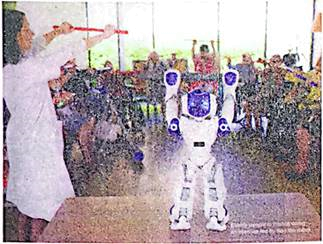 For the first time in history, there are more people above the age of 65 than children below the age of five. As populations grow older, aging societies will begin to face major challenges—such as the provision of healthcare.
(56)_____ Providing proper healthcare facilities and treatment is expensive, and the rising cost of healthcare puts a lot of pressure on the working population. In Europe, for example, there are currently four working people supporting one elderly person. By 2050, this number will fall to two workers per elderly person.
One common health problem that affects elderly people is Alzheimer’s disease. (57)_____ Because of memory loss and behavioural changes, people with Alzheimer s may slowly become unable to take care of themselves, eventually requiring constant care from family members or caregivers.
There is no cure for Alzheimer’s at the moment—drugs can only treat its symptoms.
Many developed countries are experiencing aging populations. One of the most notable examples is Japan. Japan’s population is rapidly aging as a result of fewer babies being born and people living longer. By 2060, four in ten people will be over the age of 65.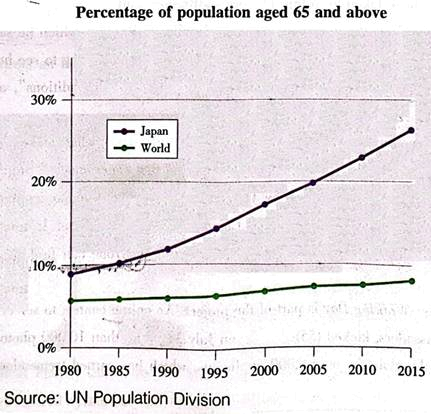 (58)_____ For example, tracking devices placed in watches or jewelry can monitor where a person is. Automated reminders can also be stored in motion sensors and placed around the house. When a sensor detects movement, it can play a recorded voice message to remind the person to lock the door or turn off the stove.
Alzheimer’s disease is a huge challenge, but we may be getting close to finding a solution. In the future, it might be possible to treat Alzheimer’s without using drugs. (59)_____ These sound waves help to clear waste in the brain that contributes to Alzheimer’s. The team has tested their technology and found that it helped to restore memory in 75 percent of mice. (60)_____ “I think this really does fundamentally change our understanding of how to treat this disease,” says Professor Jügen Götz, a co-author of the study, “and I foresee a great future for this approach.”
Questions 56—60
Choose from the sentences A—G the one which best fits each gap of 56-60. There are two extra sentences which you do not need to use.
A. Elderly people may become more confused and more difficult to look after if they got excited or upset.
B. Alzheimer’s—the most common type of dementia—affects a person’s memory, behaviour, and thinking.
C. Alzheimer disease is a degenerative disease of the brain that causes dementia, which is a gradual loss of memory, judgment, and ability to function.
D. Elderly people have a higher chance of suffering from illnesses such as diabetes, cancer, and heart disease.
E. Work on the technology isn’t complete, but, if successful, it could prevent memory loss in people with Alzheimer’s.
F. A team of researchers in Australia has created a form of technology that can send sound waves into the brain.
G. But technology can improve the lives of those living with the condition by making it easier for them to go about their daily activities.
Section A (10 marks)
Questions 56 to 60 are based on the following passage.
For the first time in history, there are more people above the age of 65 than children below the age of five. As populations grow older, aging societies will begin to face major challenges—such as the provision of healthcare.(56)_____ Providing proper healthcare facilities and treatment is expensive, and the rising cost of healthcare puts a lot of pressure on the working population. In Europe, for example, there are currently four working people supporting one elderly person. By 2050, this number will fall to two workers per elderly person.
One common health problem that affects elderly people is Alzheimer’s disease. (57)_____ Because of memory loss and behavioural changes, people with Alzheimer s may slowly become unable to take care of themselves, eventually requiring constant care from family members or caregivers.
There is no cure for Alzheimer’s at the moment—drugs can only treat its symptoms.
Many developed countries are experiencing aging populations. One of the most notable examples is Japan. Japan’s population is rapidly aging as a result of fewer babies being born and people living longer. By 2060, four in ten people will be over the age of 65.
(58)_____ For example, tracking devices placed in watches or jewelry can monitor where a person is. Automated reminders can also be stored in motion sensors and placed around the house. When a sensor detects movement, it can play a recorded voice message to remind the person to lock the door or turn off the stove.Alzheimer’s disease is a huge challenge, but we may be getting close to finding a solution. In the future, it might be possible to treat Alzheimer’s without using drugs. (59)_____ These sound waves help to clear waste in the brain that contributes to Alzheimer’s. The team has tested their technology and found that it helped to restore memory in 75 percent of mice. (60)_____ “I think this really does fundamentally change our understanding of how to treat this disease,” says Professor Jügen Götz, a co-author of the study, “and I foresee a great future for this approach.”
Questions 56—60
Choose from the sentences A—G the one which best fits each gap of 56-60. There are two extra sentences which you do not need to use.
A. Elderly people may become more confused and more difficult to look after if they got excited or upset.
B. Alzheimer’s—the most common type of dementia—affects a person’s memory, behaviour, and thinking.
C. Alzheimer disease is a degenerative disease of the brain that causes dementia, which is a gradual loss of memory, judgment, and ability to function.
D. Elderly people have a higher chance of suffering from illnesses such as diabetes, cancer, and heart disease.
E. Work on the technology isn’t complete, but, if successful, it could prevent memory loss in people with Alzheimer’s.
F. A team of researchers in Australia has created a form of technology that can send sound waves into the brain.
G. But technology can improve the lives of those living with the condition by making it easier for them to go about their daily activities.
26
( )
27
( )
28
( )
29
( )
30
( )
Section B (10 marks)
Questions 6l to 65 are based on the following passage.
Estee Lauder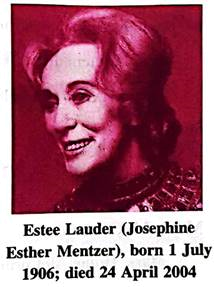 The founder of the giant US cosmetics firm died on 24 April at the age of ninety-eight. She was born Josephine Esther Mentzer in New York in 1906 to Hungarian and Czech parents and had eight siblings. Her childhood was hard and the family struggled with money. Most of the nine children helped in the family hardware store. This early experience gave her an understanding of business and what makes a successful retailer. As she grew up, Estee became interested in her uncle’s business, New Way Laboratories, which sold beauty products. She graduated from Newtown high school and after this focused on his business, helping to sell the products—first to her friends and then to beauty shops.
She founded the Estee Lauder company with the Austrian-born Joseph Lauter in 1935, who she had married in 1930. The company only sold four products at this time. Her lucky break came in 1949 when she got an order from the famous Saks Fifth Avenue department store in New York.
However, it was in 1953, with the launch of the “Youth Dew” perfume that the company’s fortunes were really transformed. By the mid-1960s, she had launched the Aramis range for men, followed by Clinique in 1968. It has become one of the world’s best-selling skincare brands.
Today the company also owns a number of famous brands, including Jo Malone, Aveda, MAC and Bobbi Brown, while the Estee Lauder brand is known in 120 countries.
She married the same man twice (in 1930 and 1942) and is survived by her two sons, Leonard and Ronald.
Akio Morita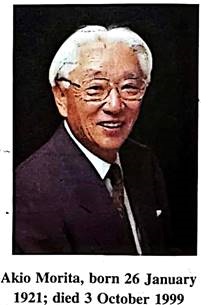 Akio Morita, co-founder of the Sony corporation, died on 3 October in Tokyo. He created one of the first truly global companies. His strategy was so successful that Sony was recently voted the number one brand by American consumers, ahead of Coca-Cola and General Electric.
Morita had a comfortable childhood. He was the eldest son of a wealthy family from Nagoya. He trained as a physicist. Before he celebrated his twenty-sixth birthday he had founded his own company with a partner, Masaru Ibuka.
In 1949 the company developed recording tape and in 1950 sold the first tape recorder in Japan. In 1957 it produced a pocket-sized radio and a year later renamed itself Sony. For the new name Mr Morita combined the Latin word for sound, sonus, with the English expression “sonny boy” to give an impression of a company full of energy and youth. In1960 it produced the first transistor television in the world. He moved with his family to the USA in 1963. This helped him to understand Americans, their market and customs. Many people believe this was the key reason for his global success.
Sony launched the Walkman in 1979 after Morita had noticed young people’s love of music.
Morita was a workaholic, but he was also a playaholic. He loved art and music, and was a sports fanatic.
He is survived by his wife Yoshiko, two sons and a daughter.
Mark McCormack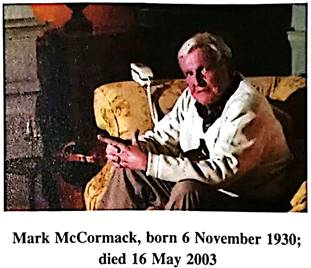 Mark Hume McCormack, sports agent, died on 16 May, aged seventy-two. Mark McCormack started the industry of sports marketing. He was the first person to realise that sports personal ties could earn extra money from endorsements and sponsorship. The company which he founded, International Management Group (IMG), represents many of the most famous sports people in the word such as Tiger Woods, Pete Sampras, the Williams sisters and Michael Schumacher.
McCormack had been a promising college golfer. However, after graduating from Yale Law School he worked as a lawyer. Later, he realised that sports marketing had great potential. His first client, in 1960, was Arnold Palmer, the famous golfer. Thanks to his energy and entrepreneurial skills, he built up a highly profitable business. By 1990 he had become the most powerful person in sports.
IMG expanded to include a television production company, sports academies and a branch representing top models such as Kate Moss.
By the end of his life, he had also published several books, including the best-selling What they don’t teach you at Harvard Business School. He also wrote a book called Never Mind School Records, which argued that academic achievements are not important for success in business.
He will be remembered for his ability to negotiate huge contracts for a wide range of sports personalities and celebrities.
He leaves three children from his first marriage and one from his second to former tennis professional, Betty Nagelson.
Questions 61 to 65
Answer the following questions with the information given in the passage.
Questions 6l to 65 are based on the following passage.
Estee Lauder
The founder of the giant US cosmetics firm died on 24 April at the age of ninety-eight. She was born Josephine Esther Mentzer in New York in 1906 to Hungarian and Czech parents and had eight siblings. Her childhood was hard and the family struggled with money. Most of the nine children helped in the family hardware store. This early experience gave her an understanding of business and what makes a successful retailer. As she grew up, Estee became interested in her uncle’s business, New Way Laboratories, which sold beauty products. She graduated from Newtown high school and after this focused on his business, helping to sell the products—first to her friends and then to beauty shops.She founded the Estee Lauder company with the Austrian-born Joseph Lauter in 1935, who she had married in 1930. The company only sold four products at this time. Her lucky break came in 1949 when she got an order from the famous Saks Fifth Avenue department store in New York.
However, it was in 1953, with the launch of the “Youth Dew” perfume that the company’s fortunes were really transformed. By the mid-1960s, she had launched the Aramis range for men, followed by Clinique in 1968. It has become one of the world’s best-selling skincare brands.
Today the company also owns a number of famous brands, including Jo Malone, Aveda, MAC and Bobbi Brown, while the Estee Lauder brand is known in 120 countries.
She married the same man twice (in 1930 and 1942) and is survived by her two sons, Leonard and Ronald.
Akio Morita
Akio Morita, co-founder of the Sony corporation, died on 3 October in Tokyo. He created one of the first truly global companies. His strategy was so successful that Sony was recently voted the number one brand by American consumers, ahead of Coca-Cola and General Electric.Morita had a comfortable childhood. He was the eldest son of a wealthy family from Nagoya. He trained as a physicist. Before he celebrated his twenty-sixth birthday he had founded his own company with a partner, Masaru Ibuka.
In 1949 the company developed recording tape and in 1950 sold the first tape recorder in Japan. In 1957 it produced a pocket-sized radio and a year later renamed itself Sony. For the new name Mr Morita combined the Latin word for sound, sonus, with the English expression “sonny boy” to give an impression of a company full of energy and youth. In1960 it produced the first transistor television in the world. He moved with his family to the USA in 1963. This helped him to understand Americans, their market and customs. Many people believe this was the key reason for his global success.
Sony launched the Walkman in 1979 after Morita had noticed young people’s love of music.
Morita was a workaholic, but he was also a playaholic. He loved art and music, and was a sports fanatic.
He is survived by his wife Yoshiko, two sons and a daughter.
Mark McCormack
Mark Hume McCormack, sports agent, died on 16 May, aged seventy-two. Mark McCormack started the industry of sports marketing. He was the first person to realise that sports personal ties could earn extra money from endorsements and sponsorship. The company which he founded, International Management Group (IMG), represents many of the most famous sports people in the word such as Tiger Woods, Pete Sampras, the Williams sisters and Michael Schumacher.McCormack had been a promising college golfer. However, after graduating from Yale Law School he worked as a lawyer. Later, he realised that sports marketing had great potential. His first client, in 1960, was Arnold Palmer, the famous golfer. Thanks to his energy and entrepreneurial skills, he built up a highly profitable business. By 1990 he had become the most powerful person in sports.
IMG expanded to include a television production company, sports academies and a branch representing top models such as Kate Moss.
By the end of his life, he had also published several books, including the best-selling What they don’t teach you at Harvard Business School. He also wrote a book called Never Mind School Records, which argued that academic achievements are not important for success in business.
He will be remembered for his ability to negotiate huge contracts for a wide range of sports personalities and celebrities.
He leaves three children from his first marriage and one from his second to former tennis professional, Betty Nagelson.
Questions 61 to 65
Answer the following questions with the information given in the passage.
31
What area of business was Estee Lauder in?
32
Who used words from two languages to come up with the name for their company?
33
Who thought that you did not need to succeed at university in order to succeed in business?
34
What was Mark McCormack most famous for?
35
Which person came from a poor family background?
Section C (10 marks)
Questions 66 to 70 are based on the following passage.
Many children play with rubber ducks when they have a bath, but some rubber ducks float in a much bigger bath. In 1992, a ship travelling from China to Seattle was caught in a big storm. During the storm, 350 containers fell off the ship. One of the containers broke open and thousands of rubber ducks floated out. After the storm, the ducks travelled along the coast of Alaska until they reached the Bering Strait in 1995.
Travelling from the Pacific Ocean to Atlantic Ocean took another five years because they were trapped in the Arctic ice, but they were seen near Iceland in 2000. Finally, the ducks arrived in New England in 2003. It had taken them 11 years to travel from one side of the US to another. Not all the ducks arrived in New England, however; some of them travelled to Hawaii, and some others went to Europe instead. Oceanographers, scientists who study the oceans, learned a lot about how water moves in the oceans by studying the ducks’ journey.
It’s a cute story. We smile when we think about the little ducks floating in the huge ocean, and we feel good that these toy ducks helped scientists learn more about the world. But maybe we should think about these ducks in a different way. The ducks came from one of the 350 containers that fell off one ship in 1992. It is estimated that about 10,000 containers fall off ships each year. These containers carry many different kinds of goods, from rubber ducks to dangerous chemicals, some of which can damage the ocean environment.
Today we know that there aren’t more fish in the sea; we have over-fishing for many years. Some Canadian scientists discovered that in just 50 years humans have caught 90 percent of large fish like tuna and marlin. For example, Japanese fishermen caught 200,000 tuna near Brazil in the first 15 years of fishing there, but in the last years, they have caught zero. The Grand Banks, a fishery near Canada, used to have the most cod anywhere in the world. Today there are no cod at all. For 10 years, nobody had been allowed to catch fish there, but there are still no cod. They may never come back.
We also put a lot of “drops” into the oceans. As well as the 10,000 containers that fall into the oceans each year, we have also added sewage, household garbage, oil, hundreds of thousands of tonnes of nuclear waste, as well as chemical weapons, and even spacecraft! All this garbage can affect the oceans. It was recently discovered that salmon in the sea near a nuclear power station in Scotland were radioactive. It was a very low level of radioactivity; you would have to eat more than 91 tonnes of the fish in a year before it would be dangerous, but the radiation came from the waste emptied into the sea by the power station. In the US, 41 states say that pregnant women shouldn’t eat fish because they contain mercury. About 48 tonnes of mercury are released by American power stations each year, and much of it ends up in the sea. Mercury can be dangerous: it caused Minamata disease in Japan in the 1950s. The American warning is just a precaution, but one that is a result of human pollution of the oceans.
Fortunately steps are being taken to reduce the pollution of the oceans. The Ocean Dumping Ban Act, which outlawed the dumping of most kinds of rubbish into the oceans, was passed in the US in 1988. Many countries are slowing or stopping the dumping of nuclear waste into the oceans, and some are even trying to find ways to help the oceans recover.
We all share the oceans, and we are all responsible for looking after them. If we take care of them now, then we can be sure that our children will be able to enjoy them safely.
Questions 66 to 70
Complete the summary below with information from the passage, using no more than three words for each blank.
Our oceans are in danger! For many years, we have both (66)_____ and pollution of our oceans. Today, some of our best (67)_____ have run out of fish, and some of the fish we eat are now polluted with mercury and (68)_____ chemicals. If we want to enjoy eating fish in the future, we must take (69)_____ today, and (70)_____ of garbage into our oceans.
Questions 66 to 70 are based on the following passage.
Many children play with rubber ducks when they have a bath, but some rubber ducks float in a much bigger bath. In 1992, a ship travelling from China to Seattle was caught in a big storm. During the storm, 350 containers fell off the ship. One of the containers broke open and thousands of rubber ducks floated out. After the storm, the ducks travelled along the coast of Alaska until they reached the Bering Strait in 1995.
Travelling from the Pacific Ocean to Atlantic Ocean took another five years because they were trapped in the Arctic ice, but they were seen near Iceland in 2000. Finally, the ducks arrived in New England in 2003. It had taken them 11 years to travel from one side of the US to another. Not all the ducks arrived in New England, however; some of them travelled to Hawaii, and some others went to Europe instead. Oceanographers, scientists who study the oceans, learned a lot about how water moves in the oceans by studying the ducks’ journey.
It’s a cute story. We smile when we think about the little ducks floating in the huge ocean, and we feel good that these toy ducks helped scientists learn more about the world. But maybe we should think about these ducks in a different way. The ducks came from one of the 350 containers that fell off one ship in 1992. It is estimated that about 10,000 containers fall off ships each year. These containers carry many different kinds of goods, from rubber ducks to dangerous chemicals, some of which can damage the ocean environment.
Today we know that there aren’t more fish in the sea; we have over-fishing for many years. Some Canadian scientists discovered that in just 50 years humans have caught 90 percent of large fish like tuna and marlin. For example, Japanese fishermen caught 200,000 tuna near Brazil in the first 15 years of fishing there, but in the last years, they have caught zero. The Grand Banks, a fishery near Canada, used to have the most cod anywhere in the world. Today there are no cod at all. For 10 years, nobody had been allowed to catch fish there, but there are still no cod. They may never come back.
We also put a lot of “drops” into the oceans. As well as the 10,000 containers that fall into the oceans each year, we have also added sewage, household garbage, oil, hundreds of thousands of tonnes of nuclear waste, as well as chemical weapons, and even spacecraft! All this garbage can affect the oceans. It was recently discovered that salmon in the sea near a nuclear power station in Scotland were radioactive. It was a very low level of radioactivity; you would have to eat more than 91 tonnes of the fish in a year before it would be dangerous, but the radiation came from the waste emptied into the sea by the power station. In the US, 41 states say that pregnant women shouldn’t eat fish because they contain mercury. About 48 tonnes of mercury are released by American power stations each year, and much of it ends up in the sea. Mercury can be dangerous: it caused Minamata disease in Japan in the 1950s. The American warning is just a precaution, but one that is a result of human pollution of the oceans.
Fortunately steps are being taken to reduce the pollution of the oceans. The Ocean Dumping Ban Act, which outlawed the dumping of most kinds of rubbish into the oceans, was passed in the US in 1988. Many countries are slowing or stopping the dumping of nuclear waste into the oceans, and some are even trying to find ways to help the oceans recover.
We all share the oceans, and we are all responsible for looking after them. If we take care of them now, then we can be sure that our children will be able to enjoy them safely.
Questions 66 to 70
Complete the summary below with information from the passage, using no more than three words for each blank.
Our oceans are in danger! For many years, we have both (66)_____ and pollution of our oceans. Today, some of our best (67)_____ have run out of fish, and some of the fish we eat are now polluted with mercury and (68)_____ chemicals. If we want to enjoy eating fish in the future, we must take (69)_____ today, and (70)_____ of garbage into our oceans.
36
( )
37
( )
38
( )
39
( )
40
( )
五、Part Ⅴ Translation
15 marks
41
Section A (5 marks)
Translate the following paragraph into Chinese. Write the answers on the answer sheet.
All of these activities such as spending good time with family and drinking apple wine by the fire encourage getting into the festive holiday mood. So does taking out your ugly Christmas sweaters. You might show off your tackiest (最俗气的) side at an ugly Christmas Sweater Party. Ugly Christmas sweaters have appeared with new public acceptance. They’re no longer creations made by grandmas. They aren’t items that family members can only get from a thrift store. They have become a cultural idea. Even celebrities are in on the action. The market wants to make money from this cultural idea, especially during the winter time.
Translate the following paragraph into Chinese. Write the answers on the answer sheet.
All of these activities such as spending good time with family and drinking apple wine by the fire encourage getting into the festive holiday mood. So does taking out your ugly Christmas sweaters. You might show off your tackiest (最俗气的) side at an ugly Christmas Sweater Party. Ugly Christmas sweaters have appeared with new public acceptance. They’re no longer creations made by grandmas. They aren’t items that family members can only get from a thrift store. They have become a cultural idea. Even celebrities are in on the action. The market wants to make money from this cultural idea, especially during the winter time.
42
Section B (10 marks)
Translate the following paragraph into English. Write the answers on the answer sheet.
从来就没有完美的幸福。人类不存在尽善尽美的状况。无论幸福可能是别的什么东西,它既不在于财富也不在于成就,而是在于追求的过程。我们要时刻牢记,我们生来并不是享受幸福而是追求幸福。幸福在于追求的本身,在于追求我们终生为之奋斗并从中获得启迪的有意义的事情,也就是说在于追求的过程。
Translate the following paragraph into English. Write the answers on the answer sheet.
从来就没有完美的幸福。人类不存在尽善尽美的状况。无论幸福可能是别的什么东西,它既不在于财富也不在于成就,而是在于追求的过程。我们要时刻牢记,我们生来并不是享受幸福而是追求幸福。幸福在于追求的本身,在于追求我们终生为之奋斗并从中获得启迪的有意义的事情,也就是说在于追求的过程。
六、Part Ⅵ EC
10 marks(Error Correction)
43
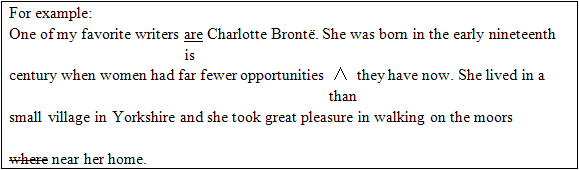
There are 10 errors altogether in the following passage. The errors are: missing words, unnecessary words and wrong words. Please correct them as follows: for a missing word, mark its position with the symbol “∧” and write it; for an unnecessary word, cross it out with the symbol “\”; for a wrong word, underline it and write the correct word. An example of how to correct the error is provided below. Write the answers on the answer sheet.
There are many reasons where we should recycle household waste. The main reason is to avoid use up valuable resources making new things when it is not necessary. However, I do not think the government should make it one compulsory of people to recycle their waste.
If the government makes a law that all households must recycle its rubbish, it could get to more problems. For example, how can you check that people are recycling everything? It is not practical to do this. In addition, there is the argument that individuals should be allowed to decide for them whether to throw something away and to recycle it.
I believe the most sensible approach is for the government to put more money into recycling schemes. The most successful are the ones where the government gives each household special box to put different kinds of waste and they provide a regular collection service. There are separate boxes for plastic, metal, glass etc. This makes it easier for people to recycle and they are therefore as less likely to throw things in the rubbish bin.
There are many reasons where we should recycle household waste. The main reason is to avoid use up valuable resources making new things when it is not necessary. However, I do not think the government should make it one compulsory of people to recycle their waste.
If the government makes a law that all households must recycle its rubbish, it could get to more problems. For example, how can you check that people are recycling everything? It is not practical to do this. In addition, there is the argument that individuals should be allowed to decide for them whether to throw something away and to recycle it.
I believe the most sensible approach is for the government to put more money into recycling schemes. The most successful are the ones where the government gives each household special box to put different kinds of waste and they provide a regular collection service. There are separate boxes for plastic, metal, glass etc. This makes it easier for people to recycle and they are therefore as less likely to throw things in the rubbish bin.
七、Part Ⅶ IQ Test
10 marks
44
There are five IQ Test questions in this part. Write the answers on the answer sheet.
How many minutes is it before 12 noon if 15 minutes ago it was four times as many minutes past 9 am? What time is it actually?
How many minutes is it before 12 noon if 15 minutes ago it was four times as many minutes past 9 am? What time is it actually?
45
A well-known phrase has been divided into groups of three letters that have then been placed in the wrong order. Find the phrase:
EST HON OBI LTW ONE RDS WIT KIL
EST HON OBI LTW ONE RDS WIT KIL
46
Find the missing letter. You may find you need the aid of a man of genius.

47
The numbers in each sector of the wheel are linked in some way. Find the number needed to replace the question mark.
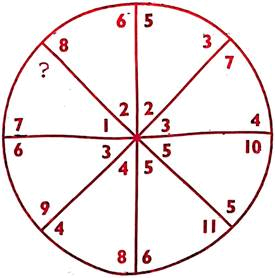
48
Which circle should replace the question mark?
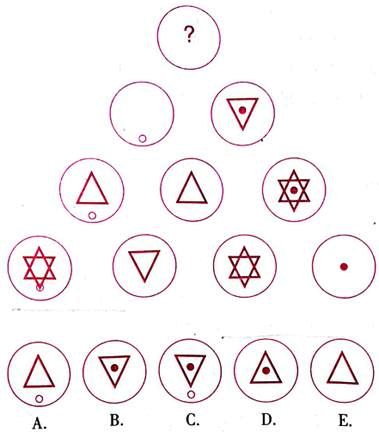
八、Part Ⅷ Writing
30 marks
49
Section A (10 marks)
The pictures below show the later stages of producing bars of milk chocolate in a factory. Write a paragraph describing the process, using the words next to each picture.
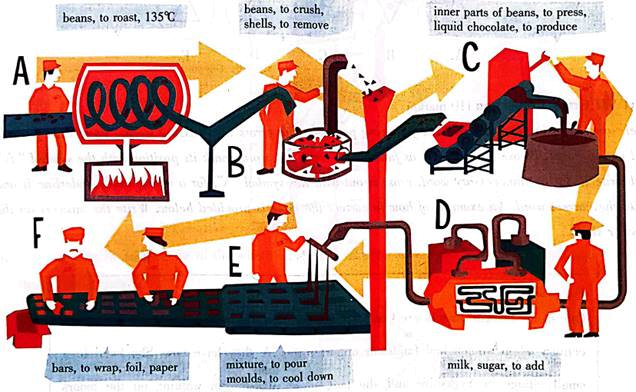
Write an article of at least 120 words on the answer sheet.
The pictures below show the later stages of producing bars of milk chocolate in a factory. Write a paragraph describing the process, using the words next to each picture.
Write an article of at least 120 words on the answer sheet.
50
Section B (20 marks)
Think of some predictions for the future according to the two topics: education and work; health and lifestyle. What will your life, your country and the world be like ten years from now?
Write an article of at least 180 words in an appropriate style on the answer sheet.
Think of some predictions for the future according to the two topics: education and work; health and lifestyle. What will your life, your country and the world be like ten years from now?
Write an article of at least 180 words in an appropriate style on the answer sheet.
输入阅读码
查看答案与解析需要输入阅读码