2027年硕士研究生《英语二》模拟试卷一
英语二
模拟试卷
共 48 题
4320 次浏览
更新于 2026-09-26
一、完形填空
下列每小题的四个选项中,只有一项是最符合题意的正确答案,多选、错选或不选均不得分。
A preference for instrumental music indicates higher intelligence, research finds.People __1__ ambient music, smooth jazz, film soundtracks, classical music and similar genres without vocals tend to have higher IQs.While vocal music __2__ be seen as the " __3__ " of instrumental music, liking vocal music has no link to IQ.__4__ other words, many people with high IQs also like vocal music, but so do many with less impressive levels of __5__.
The conclusions come from a survey of 1,500 people.All were __6__ IQ tests and asked about their preferences for eighteen musical __7__ .The results showed that "...net of age,race, sex, education, family income, religion, current and past marital status and __8__ of children, more intelligent Americans are more likely to prefer __9__ music such as big band, classical and easy listening than less __10__ Americans."
A second __11__ survey of thousands of 16-year-olds and their musical preferences was carried out in the UK in the 1980s.This also found a __12__ between high intelligence and apreference for instrumental music.One theory about why liking instrumental music is linked to high IQ is the cognitive complexity of the music.
__13__ , the researchers found this couldn't be true.Opera, for example, is seen as complex, yet the people who like it are no more intelligent than those who __14__.The study's authors write: " It would be difficult to make the case __15__ big-band music is more cognitively complex than classical music.On the other extreme, as __16__, preference for rap music is __17__ negatively correlated with intelligence.However, preference for gospel musicis even more strongly negatively correlated with it.It would be difficult to make the case that gospel is less cognitively complex than rap."
Instead, the __18__ , according to Dr Satoshi Kanazawa, the study's co-author, is that instrumental music is more novel.Music that is novel——in other words, __19__ more recently in evolutionary terms——tends to be preferred by people with __20__ IQs.
The conclusions come from a survey of 1,500 people.All were __6__ IQ tests and asked about their preferences for eighteen musical __7__ .The results showed that "...net of age,race, sex, education, family income, religion, current and past marital status and __8__ of children, more intelligent Americans are more likely to prefer __9__ music such as big band, classical and easy listening than less __10__ Americans."
A second __11__ survey of thousands of 16-year-olds and their musical preferences was carried out in the UK in the 1980s.This also found a __12__ between high intelligence and apreference for instrumental music.One theory about why liking instrumental music is linked to high IQ is the cognitive complexity of the music.
__13__ , the researchers found this couldn't be true.Opera, for example, is seen as complex, yet the people who like it are no more intelligent than those who __14__.The study's authors write: " It would be difficult to make the case __15__ big-band music is more cognitively complex than classical music.On the other extreme, as __16__, preference for rap music is __17__ negatively correlated with intelligence.However, preference for gospel musicis even more strongly negatively correlated with it.It would be difficult to make the case that gospel is less cognitively complex than rap."
Instead, the __18__ , according to Dr Satoshi Kanazawa, the study's co-author, is that instrumental music is more novel.Music that is novel——in other words, __19__ more recently in evolutionary terms——tends to be preferred by people with __20__ IQs.
1
第(1)题选__
- A.good at
- B.fond of
- C.gifted in
- D.used to
2
第(2)题选__
- A.must
- B.would
- C.might
- D.should
3
第(3)题选__
- A.equivalent
- B.opposite
- C.substitution
- D.contradictory
4
第(4)题选__
- A.With
- B.At
- C.By
- D.In
5
第(5)题选__
- A.preference
- B.intelligence
- C.wisdom
- D.interest
6
第(6)题选__
- A.given
- B.presented
- C.provided
- D.taken
7
第(7)题选__
- A.genres
- B.features
- C.instruments
- D.plays
8
第(8)题选__
- A.education
- B.ideas
- C.number
- D.love
9
第(9)题选__
- A.rap
- B.instrumental
- C.folk
- D.classical
10
第(10)题选__
- A.stupid
- B.wise
- C.clever
- D.intelligent
11
第(11)题选__
- A.recent
- B.likely
- C.familiar
- D.similar
12
第(12)题选__
- A.link
- B.relation
- C.connection
- D.linkage
13
第(13)题选__
- A.Thereby
- B.However
- C.Therefore
- D.Similarly
14
第(14)题选__
- A.wouldn't
- B.shouldn't
- C.don't
- D.aren't
15
第(15)题选__
- A.who
- B.where
- C.that
- D.which
16
第(16)题选__
- A.suspected
- B.respected
- C.expected
- D.inspected
17
第(17)题选__
- A.roughly
- B.significantly
- C.largely
- D.greatly
18
第(18)题选__
- A.idea
- B.answer
- C.effect
- D.reason
19
第(19)题选__
- A.created
- B.reformed
- C.played
- D.developed
20
第(20)题选__
- A.minor
- B.lower
- C.higher
- D.greater
二、阅读理解Part A
下列每小题的四个选项中,只有一项是最符合题意的正确答案,多选、错选或不选均不得分。
It's a seemingly intractable dilemma, suddenly as salient in Berlin or Tokyo as it is in Washington: How do you save people's economic livelihoods while telling those same people to stay home?
A global recession, many forecasters say, is here and is growing more severe by the day, as millions of consumers and workers in Europe, Asia, and North America have been sidelined as governments take strict measures to curb the COVID-19 pandemic.Actions by governments and central banks ramped up, not so much in an effort to prevent a recession as simply to weather a storm that could easily become more severe than the global financial crisis a decade ago.
Help can't come soon enough for Dominik Wilkinson and his co-workers at a restaurant in the northern German town of Bielefeld.The restaurant's 40 staff members were already working sharply reduced hours before Germany declared restaurants takeout-only for at least two weeks."A prolonged closure would be death, in terms of revenue.It's basically the same for every small and medium sized company," says Mr.Wilkinson, a shift manager.
In the United States, a March 19 Labor Department report showed weekly claims for unemployment benefits spiking more than at any time during the 2008 financial crisis.Every day brings more turmoil in global stock and bond markets as investors seek safe havens, even as central banks offer up amounts not seen since the financial meltdown of 2008.Yet the situation's severity is spurring governments into action.Relief measures range from mortgage or tax holidays to cash infusions for households, while also lending or simply giving money to businesses to prevent mass layoffs or permanent closures.Analysts say these are the kinds of measures that can help, but effectiveness will hinge on their magnitude and speed of delivery.And what makes this crisis different, they add, is that a pandemic must also be tamed because the economic and health crises are intertwined.
The Group of Seven international economic organization has already issued a "whatever it takes" statement of determination.The International Monetary Fund and World Bank are mobilizing help for developing nations.But so far it's an open question whether global leadership today can match the kind of concerted effort that emerged from the depths of the 2008 crisis."A lot of people didn't quite measure the gravity of the situation for a while, including myself to be honest," says Ioana Marinescu, an economist at the University of Pennsylvania in Philadelphia."We have to think about supporting business.That's very important because if we allow businesses to fail, we are losing jobs, we're also losing capital."
A global recession, many forecasters say, is here and is growing more severe by the day, as millions of consumers and workers in Europe, Asia, and North America have been sidelined as governments take strict measures to curb the COVID-19 pandemic.Actions by governments and central banks ramped up, not so much in an effort to prevent a recession as simply to weather a storm that could easily become more severe than the global financial crisis a decade ago.
Help can't come soon enough for Dominik Wilkinson and his co-workers at a restaurant in the northern German town of Bielefeld.The restaurant's 40 staff members were already working sharply reduced hours before Germany declared restaurants takeout-only for at least two weeks."A prolonged closure would be death, in terms of revenue.It's basically the same for every small and medium sized company," says Mr.Wilkinson, a shift manager.
In the United States, a March 19 Labor Department report showed weekly claims for unemployment benefits spiking more than at any time during the 2008 financial crisis.Every day brings more turmoil in global stock and bond markets as investors seek safe havens, even as central banks offer up amounts not seen since the financial meltdown of 2008.Yet the situation's severity is spurring governments into action.Relief measures range from mortgage or tax holidays to cash infusions for households, while also lending or simply giving money to businesses to prevent mass layoffs or permanent closures.Analysts say these are the kinds of measures that can help, but effectiveness will hinge on their magnitude and speed of delivery.And what makes this crisis different, they add, is that a pandemic must also be tamed because the economic and health crises are intertwined.
The Group of Seven international economic organization has already issued a "whatever it takes" statement of determination.The International Monetary Fund and World Bank are mobilizing help for developing nations.But so far it's an open question whether global leadership today can match the kind of concerted effort that emerged from the depths of the 2008 crisis."A lot of people didn't quite measure the gravity of the situation for a while, including myself to be honest," says Ioana Marinescu, an economist at the University of Pennsylvania in Philadelphia."We have to think about supporting business.That's very important because if we allow businesses to fail, we are losing jobs, we're also losing capital."
21
According to the forecasters, the global recession_______.
- A.proves milder than the financial crisis 10 years ago
- B.has put millions of consumers and workers on the sideline
- C.is deepened by the strict measures of the government
- D.was beaten by governments and central banks
22
It can be inferred from Paragraph 3 that Dominik Wilkinson and his co-workers_______.
- A.worked longer hours than before
- B.are providing takeout service
- C.will be laid off after the closure
- D.may have no income in the future
23
Which of the following is TRUE about the relief measures according to Paragraph 4?
- A.They have been proved unavailing.
- B.They can prevent companies from going out of business.
- C.Their effectiveness varies with certain factors.
- D.Their implementation is still up in the air.
24
The author's attitude toward the current global leadership can be described as_______.
- A.supportive
- B.skeptical
- C.defensive
- D.tolerant
25
What is the main idea of the text?
- A.Nations try to soften the economic blow.
- B.The world manages to combat the pandemic.
- C.The recession exerts a negative impact on humanity.
- D.The unemployed seek safe havens.
When people donate blood it is a civic-minded act of charity—and therefore ought to be as easy to do as possible.But now the NHS has thrown a spanner in the works.Health chiefs canceled the old "bloodmobiles", which used to be seen on high streets and in workplaces, in 2017 and replaced them with an appointment-based system that doesn't allow for walk-in visits.
This threatens the volunteer spirit.Older donors might not be able to access the online system.One user complains that he made an appointment but discovered upon arrival that it had been cancelled.Another says that no online appointments were available at all, so he showed up anyway only to be told that he would have to wait at least two hours.The NHS has apologised for any errors and says that routine donations are now made by appointment because that helps hospitals collect the blood types they need.This isn't good enough.If the system has bugs, they need to be fixed fast—and NHS managers must bear in mind the historic, cultural aspect of blood donation.
In his famous 1970 book The Gift Relationship, Richard Titmuss used British blood donation as an example of altruism (利他主义) in action—arguing that Britons gave more and of higher quality because they did so voluntarily.Over the years, many donors have become regulars: they have built a personal relationship with the health service that ought to be nurtured and treasured.Although change is sometimes unavoidable, no adaptation should actually make it harder for individuals to do something good—and the description that some users paint of the current system suggests that it is putting an obstacle in the way of human kindness.As one man put it: "The system has now just made it more and more difficult to make a donation, as though they are doing us a favour."
Would it be impossible to combine online booking and walk-in appointments? We don't see why it should be.It would be a tragedy if—in the rush towards efficiency—the NHS undermined compassion with bureaucracy.When people want to give, they should be able to give, for it is this spirit that keeps many vital services going.Volunteers are not looking for a pat on the back for what they do.They simply don't want to be prevented from doing their bit.
This threatens the volunteer spirit.Older donors might not be able to access the online system.One user complains that he made an appointment but discovered upon arrival that it had been cancelled.Another says that no online appointments were available at all, so he showed up anyway only to be told that he would have to wait at least two hours.The NHS has apologised for any errors and says that routine donations are now made by appointment because that helps hospitals collect the blood types they need.This isn't good enough.If the system has bugs, they need to be fixed fast—and NHS managers must bear in mind the historic, cultural aspect of blood donation.
In his famous 1970 book The Gift Relationship, Richard Titmuss used British blood donation as an example of altruism (利他主义) in action—arguing that Britons gave more and of higher quality because they did so voluntarily.Over the years, many donors have become regulars: they have built a personal relationship with the health service that ought to be nurtured and treasured.Although change is sometimes unavoidable, no adaptation should actually make it harder for individuals to do something good—and the description that some users paint of the current system suggests that it is putting an obstacle in the way of human kindness.As one man put it: "The system has now just made it more and more difficult to make a donation, as though they are doing us a favour."
Would it be impossible to combine online booking and walk-in appointments? We don't see why it should be.It would be a tragedy if—in the rush towards efficiency—the NHS undermined compassion with bureaucracy.When people want to give, they should be able to give, for it is this spirit that keeps many vital services going.Volunteers are not looking for a pat on the back for what they do.They simply don't want to be prevented from doing their bit.
26
It should be as easy as possible to give blood in that_______.
- A.it is a voluntary act
- B.it is an act of kindness
- C.it is complex to appoint
- D.it is a wholesome activity
27
Which of the following presents a danger to the volunteer spirit?
- A.The online booking system.
- B.The cancel of bloodmobiles.
- C.The involvement of health chiefs.
- D.The unexpected system failure.
28
In the third paragraph, the author expressed his_______.
- A.sorry for regular donors
- B.appreciation for Britons' altruism
- C.opposition to the current system
- D.concerns about people's quality
29
Instead of seeking efficiency, it is advisable to_______.
- A.praise volunteers for their good deeds in time
- B.adopt online booking and walk-in appointments
- C.express more sympathy to the bureaucracy
- D.encourage citizens to maintain volunteer spirit
30
The most suitable title for this text would be_______.
- A.It Should Be as Easy as Possible to Give Blood
- B.It Should Take Various Blood Donation Methods
- C.It Isn't Good Enough to Adopt Online Booking System
- D.It Is Crucial to Maintain Citizen's Volunteer Spirit
For students, COVID-19 is making life difficult.Many must choose between inconveniently timed seminars streamed into their parents' living rooms and inconveniently deferring their studies until life is more normal.For universities, it is disastrous.They will not only lose huge chunks of revenue from foreign students, but, because campus life spreads infection, they will have to transform the way they operate.
Yet the disaster may have an upside.For many years government subsidies and booming demand have allowed universities to resist changes that could benefit both students and society.They may not be able to do so for much longer.
The damage from COVID-19 means that, in the short term at least, universities will be more dependent on governments than ever.The IFS (Institute for Fiscal Studies) reckons that 13 universities in Britain risk going bust.Governments ought to help colleges, but should favour institutions that provide good teaching and research or benefit their community.Those that satisfy none of those criteria should be allowed to go to the wall.
Those that survive must learn from the pandemic.Until now most of them, especially the ones at the top of the market, have resisted putting undergraduate courses online.That is not because remote teaching is necessarily bad—a third of graduate students were studying fully online last year—but because a three- or four- year degree on campus was universities' and students' idea of what an undergraduate education should look like.Demand for the services of universities was so intense that they had no need to change.
Now change is being forced upon them.The College Crisis Initiative at Davidson College says that less than a quarter of American universities are likely to teach mostly or wholly in person next term.If that persists, it will reduce the demand.Many students buy the university experience not just to boost their earning capacity, but also to get away from their parents, make friends and find partners.But it should also cut costs, by giving students the option of living at home while studying.
COVID-19 is catalyzing innovation, too.The Big Ten Academic Alliance, a group of midwestern universities is offering many of its 600,000 students the opportunity to take online courses at other universities in the group.There is huge scope for using digital technology to improve education.Poor in-person lectures could be replaced by online ones from the best in the world, freeing up time for the small-group teaching which students value most.
Universities are rightly proud of their centuries-old traditions, but their ancient pedigrees have too often been used as an excuse for resisting change.If COVID-19 shakes them out of their complacency, some good may yet come from this disaster.
Yet the disaster may have an upside.For many years government subsidies and booming demand have allowed universities to resist changes that could benefit both students and society.They may not be able to do so for much longer.
The damage from COVID-19 means that, in the short term at least, universities will be more dependent on governments than ever.The IFS (Institute for Fiscal Studies) reckons that 13 universities in Britain risk going bust.Governments ought to help colleges, but should favour institutions that provide good teaching and research or benefit their community.Those that satisfy none of those criteria should be allowed to go to the wall.
Those that survive must learn from the pandemic.Until now most of them, especially the ones at the top of the market, have resisted putting undergraduate courses online.That is not because remote teaching is necessarily bad—a third of graduate students were studying fully online last year—but because a three- or four- year degree on campus was universities' and students' idea of what an undergraduate education should look like.Demand for the services of universities was so intense that they had no need to change.
Now change is being forced upon them.The College Crisis Initiative at Davidson College says that less than a quarter of American universities are likely to teach mostly or wholly in person next term.If that persists, it will reduce the demand.Many students buy the university experience not just to boost their earning capacity, but also to get away from their parents, make friends and find partners.But it should also cut costs, by giving students the option of living at home while studying.
COVID-19 is catalyzing innovation, too.The Big Ten Academic Alliance, a group of midwestern universities is offering many of its 600,000 students the opportunity to take online courses at other universities in the group.There is huge scope for using digital technology to improve education.Poor in-person lectures could be replaced by online ones from the best in the world, freeing up time for the small-group teaching which students value most.
Universities are rightly proud of their centuries-old traditions, but their ancient pedigrees have too often been used as an excuse for resisting change.If COVID-19 shakes them out of their complacency, some good may yet come from this disaster.
31
Due to COVID- 19, universities_______.
- A.will lose a lot of income from international students
- B.would suspend all courses until life is more normal
- C.will need more revenue from international students
- D.must be completely closed to prevent the spread of disease
32
It can be learned from Paragraph 2 that_______.
- A.the disaster weakened the government's needs
- B.the disaster will prompt universities to reform
- C.universities will no longer receive government subsidies
- D.universities are reluctant to contribute to students and society
33
Facing the damage caused by the epidemic, governments_______.
- A.will face severe financial burden
- B.should not shut their eyes to universities
- C.should treat all universities equally
- D.should help universities that meet the criteria
34
Which of the following is true according to Paragraphs 4-5?
- A.Living at home while studying will cut a lot of expenses.
- B.Many universities are still reluctant to give up offline teaching.
- C.Remote teaching cannot meet students' expectations of education.
- D.Universities sometimes fail to meet people's needs for university services.
35
The author's attitude toward reform in universities is_______.
- A.supportive
- B.ambiguous
- C.objective
- D.skeptical
Missouri lawmakers on Friday approved legislation to ban abortion after eight weeks of pregnancy, becoming the latest state to put severe restrictions on the procedure.The legislation passed the Republican-led state house of representatives on Friday afternoon after being approved by the senate early on Thursday, and now heads to the desk of Missouri's Republican governor, Mike Parson.Parson is expected to sign it.
In an echo of the tight strictures put on abortion in Alabama earlier this week with a law that has been passed but not yet come into force, the legislation includes an exception for medical emergencies threatening a woman's health, but not for rape or incest.Doctors in Missouri could face five to 15 years in prison for performing an abortion after eight weeks, but women would not face criminal penalties for terminating their pregnancies."Until the day that we no longer have abortions in this country, I will never waver in the fight for life," Parson had said on Wednesday at a rally with supporters of the legislation.
Missouri's vote comes days after Alabama lawmakers approved, and the governor signed, a ban on abortions at any stage of pregnancy.Republican state senators there, all white men, voted down a proposed exemption for rape and incest, allowing abortions only when the woman's health is seriously threatened.Other states—Kentucky , Mississippi ,Ohio and Georgia—have passed bills to ban abortion after six weeks, the point at which cardiac activity can be detected.They are often dubbed "fetal heartbeat bills" by the conservative forces and extreme activists behind them, even though at six weeks an embryo is neither a fetus nor has a recognizable heart.
The bans, supporters acknowledge, violate current court rulings which have legalized abortion nationwide.But their goal is to get to the supreme court and persuade the justices to overturn Roe v Wade, the landmark ruling guaranteeing the right to an abortion."Missouri Governor Parson should be ashamed of riding the disgraceful coattails of 25 white men in Alabama who just voted to ban safe, legal abortion," said Leana Wen, president of Planned Parenthood Action Fund.Missouri's bill has a provision saying that if Roe is overturned, all abortions would become illegal in the state.It also says that if the eight-week ban is overturned by courts, Missouri will prohibit abortions at 14, 18, or 20 weeks of pregnancy, whichever limit is allowed to stand.The typical provision in other states is to allow abortions until 24 weeks or often later.
Protesters in Missouri's statehouse erupted into chants of "when you lie, people die" just before the votes were cast, and the reaction from advocates of reproductive rights was swift and furious.The Missouri Section of the American College of Obstetricians and Gynecologists issued a statement calling the law "medically unjustified and dangerous".Noting that Missouri has one of the highest rates of maternal mortality and morbidity in the nation, ranking 41st out of 50, the group said the legislation will "only serve to increase the numbers in Missouri and put our patients at a greater risk".
Many Democratic presidential candidates condemned the latest wave of anti-abortion legislation, including Elizabeth Warren, who earlier on Friday published a plan to protect abortion rights, by passing federal laws enshrining the rights provided under Roe v Wade.Such laws would prevent states from enacting the kind of stringent regulations that have been passed by Republican controlled statehouses.It would also ensure that abortion is covered by Medicaid and private health insurance, among other things."When I was growing up, people still got abortions," she said on Twitter, referring to the years before Roe v Wade."Some were lucky—others weren't.They all went through hell.The overwhelming majority of Americans don't want to return to that time.Congress should act to ensure that the will of the people remains the law of the land."
In an echo of the tight strictures put on abortion in Alabama earlier this week with a law that has been passed but not yet come into force, the legislation includes an exception for medical emergencies threatening a woman's health, but not for rape or incest.Doctors in Missouri could face five to 15 years in prison for performing an abortion after eight weeks, but women would not face criminal penalties for terminating their pregnancies."Until the day that we no longer have abortions in this country, I will never waver in the fight for life," Parson had said on Wednesday at a rally with supporters of the legislation.
Missouri's vote comes days after Alabama lawmakers approved, and the governor signed, a ban on abortions at any stage of pregnancy.Republican state senators there, all white men, voted down a proposed exemption for rape and incest, allowing abortions only when the woman's health is seriously threatened.Other states—Kentucky , Mississippi ,Ohio and Georgia—have passed bills to ban abortion after six weeks, the point at which cardiac activity can be detected.They are often dubbed "fetal heartbeat bills" by the conservative forces and extreme activists behind them, even though at six weeks an embryo is neither a fetus nor has a recognizable heart.
The bans, supporters acknowledge, violate current court rulings which have legalized abortion nationwide.But their goal is to get to the supreme court and persuade the justices to overturn Roe v Wade, the landmark ruling guaranteeing the right to an abortion."Missouri Governor Parson should be ashamed of riding the disgraceful coattails of 25 white men in Alabama who just voted to ban safe, legal abortion," said Leana Wen, president of Planned Parenthood Action Fund.Missouri's bill has a provision saying that if Roe is overturned, all abortions would become illegal in the state.It also says that if the eight-week ban is overturned by courts, Missouri will prohibit abortions at 14, 18, or 20 weeks of pregnancy, whichever limit is allowed to stand.The typical provision in other states is to allow abortions until 24 weeks or often later.
Protesters in Missouri's statehouse erupted into chants of "when you lie, people die" just before the votes were cast, and the reaction from advocates of reproductive rights was swift and furious.The Missouri Section of the American College of Obstetricians and Gynecologists issued a statement calling the law "medically unjustified and dangerous".Noting that Missouri has one of the highest rates of maternal mortality and morbidity in the nation, ranking 41st out of 50, the group said the legislation will "only serve to increase the numbers in Missouri and put our patients at a greater risk".
Many Democratic presidential candidates condemned the latest wave of anti-abortion legislation, including Elizabeth Warren, who earlier on Friday published a plan to protect abortion rights, by passing federal laws enshrining the rights provided under Roe v Wade.Such laws would prevent states from enacting the kind of stringent regulations that have been passed by Republican controlled statehouses.It would also ensure that abortion is covered by Medicaid and private health insurance, among other things."When I was growing up, people still got abortions," she said on Twitter, referring to the years before Roe v Wade."Some were lucky—others weren't.They all went through hell.The overwhelming majority of Americans don't want to return to that time.Congress should act to ensure that the will of the people remains the law of the land."
36
The state of Missouri put severe restriction on
- A.curbing crimes
- B.banning abortion
- C.legislative procedure
- D.unintended pregnancy
37
According to the abortion law, which of the following is an exception?
- A.Pregnancy that threatens a woman's health.
- B.Pregnancy which is caused by rape or incest.
- C.Pregnancy that has lasted for more than 8 weeks.
- D.Pregnancy in which the fetus doesn't develop well.
38
The phrase "Fetal heartbeat bills" ( Line 6, Para.3) refers that
- A.once the fetus has a heartbeat, it cannot be aborted
- B.abortion is prohibited after six weeks of pregnancy
- C.abortion is allowed when the fetus is fatal to the woman
- D.abortion can be performed if the fetus's heartbeat is abnormal
39
Which of the following statement about the anti-abortion law is true?
- A.Supporters hold that most states are currently opposed to abortion.
- B.Supporters regard that the anti-abortion law is a landmark in history.
- C.Opponents say the bill will seriously harm women's health indirectly.
- D.Opponents argue that a ban on abortion at 24 weeks or more makes sense.
40
According to the last paragraph,how did Elizabeth Warren think of abortion.?
- A.She believed that women's right to abortion should be protected.
- B.She strongly support edanti-abortion laws and condemns abortion.
- C.She thought that abortion causes great pain and harm to women.
- D.She believed women should be given more care after abortion.
三、阅读理解Part B
下列每小题的四个选项中,只有一项是最符合题意的正确答案,多选、错选或不选均不得分。
The coronavirus pandemic has forced UK universities to rapidly shift online, and no date has been confirmed for campuses tp reopen.So if universities are online, will studens still come? So far, the Universities and Colleges Admissions Service reports that very few have reneged on their offers.And for those already at university, a National Union of Students survey found that almost half of students were happy with their online learning.
Katie Barrett, a student at the University of West England, has enjoyed her online experience so far.I'm still getting all my lectures and seminars, so the learning itself hasn't been disrupted much," she says."My lecturers are doing extra Q&As via Zoom, for example, so some of the material actually feels more accessible."
These positive experiences may permanently transform universities, believes Vijay Govindarajan, a business innovation professor at Dartmouth College in the US."Universities can create high-quality multimedia experiences online.Lectures can be recorded in HD (High Definition) and reused, so more of professors' time can be spent on interacting with students.This will improve the overall quality of learning," he says."Online learning might have been a long time coming in higher education, but it's here to stay."
Online learning shouldn't be seen as a quick-fix solution to the pandemic.Allison Littlejohn, director of the UCL Institute of Education's knowledge lab, cautions that quality online courses take time and effort to create."It's crucial the online learning experience is well-designed and we don't simply shift existing content from one format to another," she says.
Equally, for many students, the value of university goes deeper than coursework and qualifications.Research by Universities UK found that almost 60% of students and recent graduates felt the social element of the campus experience helped them broaden their life experience, become more independent and confident, and develop skills like teamwork and time management.
"Learning remotely isn't the same as the visceral experience of expressing and debating ideas in a physical space," agrees Jesper Ryynanen, a student at the London School of Economics (LSE)."I chose LSE for its public events and renowned speakers, yet there'll be none of that this semester." Some students may feel that paying the same fees for digital versions of their courses would be poor value.The tuition for Ryynanen's one-year MSc(Master of Science) at the LSE is ₤29,000—far more expensive than fully online options from renowned names like Harvard University and Wharton Business School.
Kendrick Oliver, a professor at the University of Southampton, agrees too."Nothing can replace the classroom experience.Being physically together in a space means rich communication, and more energy and experimentation from everyone involved." But he acknowledges: "Habit and routine are powerful.Months of online working will make digital more of a default."
There are also reputational risks to moving online, says Jovana Karanovic, a researcher in digital platforms at VU Amsterdam in the Netherlands."Online learning may produce an unstable gig economy to connect students and educators," she explains."This competitive, fragmented learning landscape could raise accountability issues, prompt a loss of academic expertise and lower teaching standards."
The future of UK universities may lie in mixing online curriculums and offline experiences, known as blended learning.Many are already planning to introduce this to enable social distancing on campus."This can enhance students' experience of studying," says Michael Horn, co-founder of the Christensen Institute, a global education thinktank."I expect to see a lot more universities offering blended courses post-pandemic."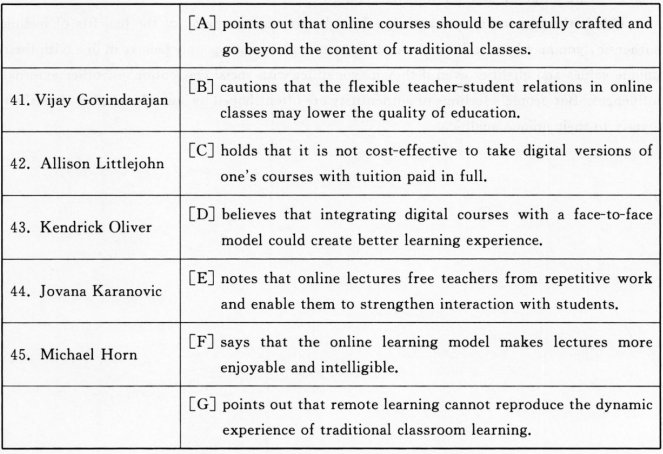
Katie Barrett, a student at the University of West England, has enjoyed her online experience so far.I'm still getting all my lectures and seminars, so the learning itself hasn't been disrupted much," she says."My lecturers are doing extra Q&As via Zoom, for example, so some of the material actually feels more accessible."
These positive experiences may permanently transform universities, believes Vijay Govindarajan, a business innovation professor at Dartmouth College in the US."Universities can create high-quality multimedia experiences online.Lectures can be recorded in HD (High Definition) and reused, so more of professors' time can be spent on interacting with students.This will improve the overall quality of learning," he says."Online learning might have been a long time coming in higher education, but it's here to stay."
Online learning shouldn't be seen as a quick-fix solution to the pandemic.Allison Littlejohn, director of the UCL Institute of Education's knowledge lab, cautions that quality online courses take time and effort to create."It's crucial the online learning experience is well-designed and we don't simply shift existing content from one format to another," she says.
Equally, for many students, the value of university goes deeper than coursework and qualifications.Research by Universities UK found that almost 60% of students and recent graduates felt the social element of the campus experience helped them broaden their life experience, become more independent and confident, and develop skills like teamwork and time management.
"Learning remotely isn't the same as the visceral experience of expressing and debating ideas in a physical space," agrees Jesper Ryynanen, a student at the London School of Economics (LSE)."I chose LSE for its public events and renowned speakers, yet there'll be none of that this semester." Some students may feel that paying the same fees for digital versions of their courses would be poor value.The tuition for Ryynanen's one-year MSc(Master of Science) at the LSE is ₤29,000—far more expensive than fully online options from renowned names like Harvard University and Wharton Business School.
Kendrick Oliver, a professor at the University of Southampton, agrees too."Nothing can replace the classroom experience.Being physically together in a space means rich communication, and more energy and experimentation from everyone involved." But he acknowledges: "Habit and routine are powerful.Months of online working will make digital more of a default."
There are also reputational risks to moving online, says Jovana Karanovic, a researcher in digital platforms at VU Amsterdam in the Netherlands."Online learning may produce an unstable gig economy to connect students and educators," she explains."This competitive, fragmented learning landscape could raise accountability issues, prompt a loss of academic expertise and lower teaching standards."
The future of UK universities may lie in mixing online curriculums and offline experiences, known as blended learning.Many are already planning to introduce this to enable social distancing on campus."This can enhance students' experience of studying," says Michael Horn, co-founder of the Christensen Institute, a global education thinktank."I expect to see a lot more universities offering blended courses post-pandemic."
41
第(41)题选
- A.A
- B.B
- C.C
- D.D
- E.E
- F.F
- G.G
42
第(42)题选
- A.A
- B.B
- C.C
- D.D
- E.E
- F.F
- G.G
43
第(43)题选
- A.A
- B.B
- C.C
- D.D
- E.E
- F.F
- G.G
44
第(44)题选
- A.A
- B.B
- C.C
- D.D
- E.E
- F.F
- G.G
45
第(45)题选
- A.A
- B.B
- C.C
- D.D
- E.E
- F.F
- G.G
四、翻译题
根据题干要求,将材料翻译成中文。
46
European Union scientists have reported the continent's warmest summer on record this year.
Measurements by the EU's Copernicus satellite system showed the average surface temperatures from June to August were about 1 degree Celsius higher than the 1991-2020 average.Temperatures across Europe were also 0.1 degree Celsius warmer than the past warmest summers on record, in 2010 and 2018.The 2021 summer temperature record marks the latest development in a long-term worldwide warming trend.Scientists have linked climate change on the planet to pollution emissions related to human activities.The Copernicus observation program has been keeping temperature records since 1950.But its records are compared with other data going back to the mid-19th century.The organization said that around the world, August 2021 tied for the third-warmest monthon record.Temperatures in August were over 0.3 degrees Celsius warmer than the 1991 to 2020 average, it reported.
Measurements by the EU's Copernicus satellite system showed the average surface temperatures from June to August were about 1 degree Celsius higher than the 1991-2020 average.Temperatures across Europe were also 0.1 degree Celsius warmer than the past warmest summers on record, in 2010 and 2018.The 2021 summer temperature record marks the latest development in a long-term worldwide warming trend.Scientists have linked climate change on the planet to pollution emissions related to human activities.The Copernicus observation program has been keeping temperature records since 1950.But its records are compared with other data going back to the mid-19th century.The organization said that around the world, August 2021 tied for the third-warmest monthon record.Temperatures in August were over 0.3 degrees Celsius warmer than the 1991 to 2020 average, it reported.
五、写作Part A
根据材料要求写一篇作文。
47
Directions:
Suppose your university is to invite Mr.Williams, a foreign professor of Chinese studies, to give a lecture on Chinese literature.Write an email to
1) send him an invitation, and
2) inform him of the students' expectation of the lecture.
You should write about 100 words on the ANSWER SHEET.
Do not use your own name.Use "Li Ming" instead.(10 points)
Suppose your university is to invite Mr.Williams, a foreign professor of Chinese studies, to give a lecture on Chinese literature.Write an email to
1) send him an invitation, and
2) inform him of the students' expectation of the lecture.
You should write about 100 words on the ANSWER SHEET.
Do not use your own name.Use "Li Ming" instead.(10 points)
六、写作Part B
根据材料要求写一篇作文。
48
Directions :
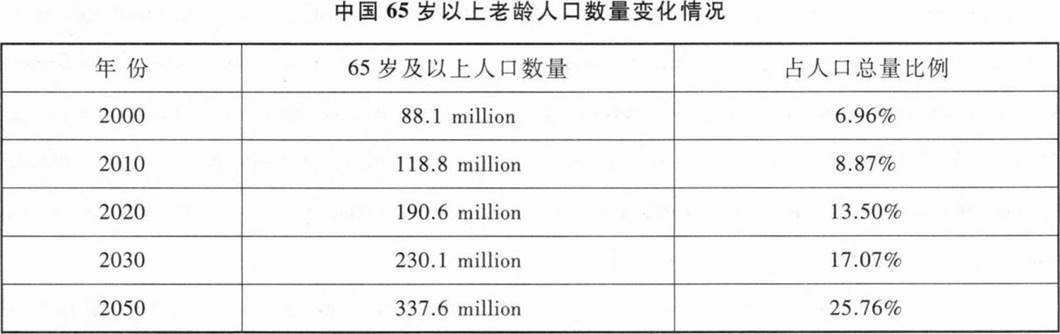
Write an essay based on the following chart.In your writing, you should
1) interpret the chart, and
2) give your comments.
You should write about 150 words on the ANSWER SHEET.( 15 points)
Write an essay based on the following chart.In your writing, you should
1) interpret the chart, and
2) give your comments.
You should write about 150 words on the ANSWER SHEET.( 15 points)
输入阅读码
查看答案与解析需要输入阅读码